
Nebraska Warrant Searches
No public statewide warrant register exists in Nebraska, so nothing returns a clean yes or no. What the state does offer is JUSTICE, the trial-court case service. It points you toward the right case and court, but it cannot certify that an arrest or bench warrant is active, recalled, served, or absent. A county sheriff's list, where one is posted, covers only that office's territory. So a practical Nebraska warrant search stitches these pieces together and ends with a phone call: the issuing court and the agency assigned to serve the order are the only ones who can confirm where things stand. Treat every online result as a lead, not a verdict.
- Use Nebraska court case information to locate a likely public case. The one-time search uses a party name; it is a case search, not a warrant-number lookup.
- If paperwork uses a legacy municipal-court, police-magistrate, or justice-of-the-peace label, confirm the current file with the Nebraska County Court. Those functions were consolidated; Nebraska has no separate general municipal or justice-of-the-peace warrant portal.
- Check the official sheriff or police site for the county connected to the case, if that office publishes a list. Read its coverage and update note before relying on it.
- Open Browse Counties to reach the county court and sheriff. Ask each office whether the warrant is currently active, which court order applies, and who holds the service record.
- For a copy or a record question that is not urgent, send a focused written request to the court or agency that keeps the record. Public-record response rules do not make this a live status check.
- For federal process, use PACER to locate public federal docket information, then contact the federal court or U.S. Marshals Service District of Nebraska for direction. A docket is not a warrant clearance result.
Federal cases run on a different track. The PACER public access site splits its case search from its filing and account functions, and its docket records can help you locate a federal case. Even so, warrant material there may be sealed, and no docket search certifies that no federal warrant exists. A Nebraska state case goes back to the local route: the issuing County or District Court and the serving sheriff remain the direct contacts. The PACER page spells out how its public access works.
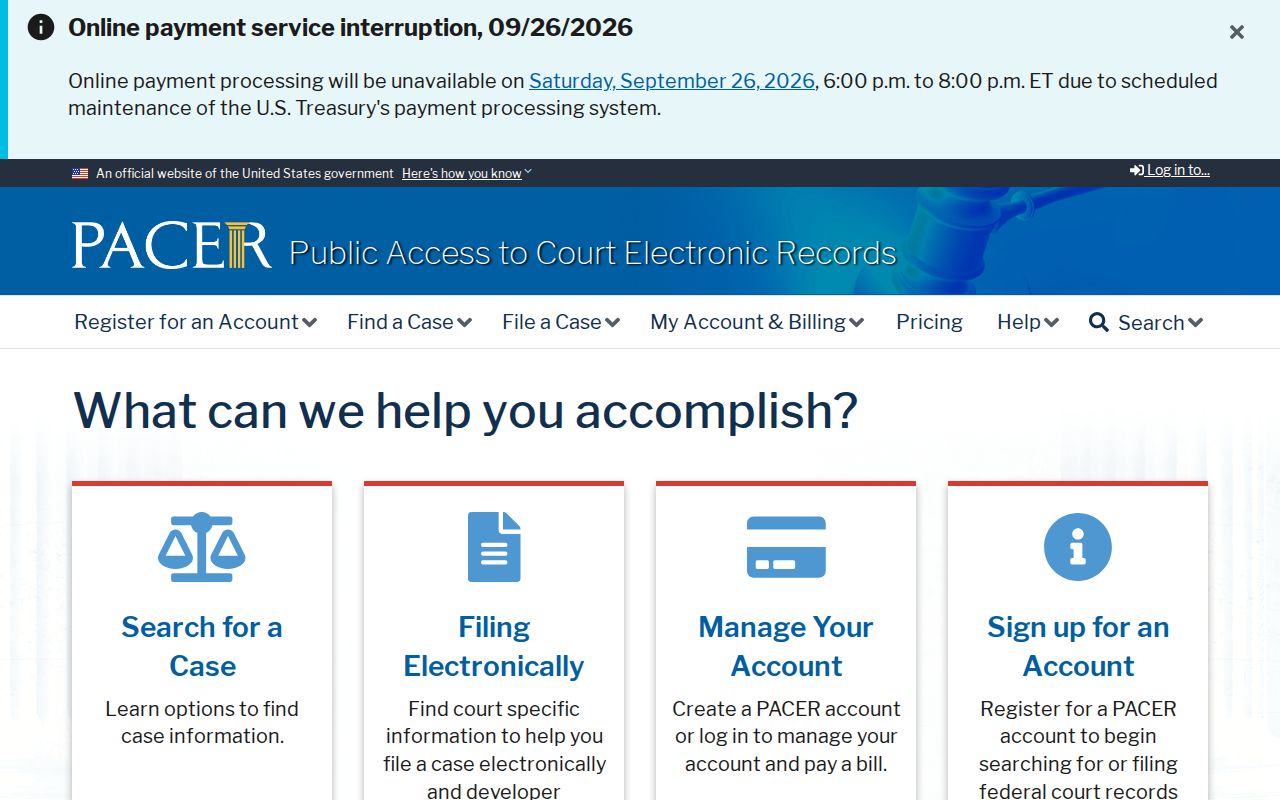
Save the federal route for cases that are actually federal. Nebraska county process belongs with the county court and sheriff.
Nebraska Has No Statewide Warrant Portal
Nebraska answers the statewide question with several separate systems, not one public warrant database. JUSTICE handles court case access for matters in Nebraska County and District Courts, and court staff use the same platform internally for warrant and protection-order work, but the public side shows case information rather than a live warrant-status screen, so it should never be described as an active-warrant register or proof that someone has no warrant. Beyond the courts, NCJIS is a secure portal reserved for criminal-justice agencies, not a public name search. The Nebraska State Patrol's criminal-history service is likewise a different product from live warrant confirmation; the State Patrol posts no warrant roster, no public door into restricted national law-enforcement systems, and no county-by-county warrant feed, and no agency system's existence implies a statewide participation or update schedule. At the county level, availability varies across Nebraska: one sheriff may publish a searchable most-wanted list while the next relies on a phone line, a records request, or case-by-case confirmation. Those channels are useful starting points, but they never add up to one complete Nebraska list. The issuing court controls the order, and the serving sheriff or named officer can tell you whether the process is held or returned. A traffic-citation suspension is a separate license matter; the Nebraska DMV compliance process is not a warrant search.
What a Nebraska Warrant Search Asks For
Nebraska publishes no statewide warrant form. What a warrant search asks for depends on the case record or the local sheriff list you are checking. A "county" field in JUSTICE narrows a court-case search; it does not pick which sheriffs report warrants. A local sheriff form covers only that one office.
| Field Label | Type | Required | Notes |
|---|---|---|---|
| JUSTICE one-time search: party name | Text | Required | Searches public trial-court case records, not warrant status or warrant number. |
| JUSTICE subscriber: county / court type | Selector | Criteria-driven | County and County/District court criteria narrow case listings; they do not identify warrant-reporting agencies. |
| JUSTICE subscriber: case type, year, judge, attorney | Text or selector | Criteria-driven | Options depend on the general case search; these are case criteria, not warrant fields. |
| Hall County sheriff list: name | Text | Local form rules | Hall describes full or partial last-name entry, with first name optional. It covers Hall County only. |
The JUSTICE one-time search is the public party-name route into Nebraska court records. The state's own page shows a case-search screen, not a warrant query, and it offers no date-of-birth or statewide warrant-number field.
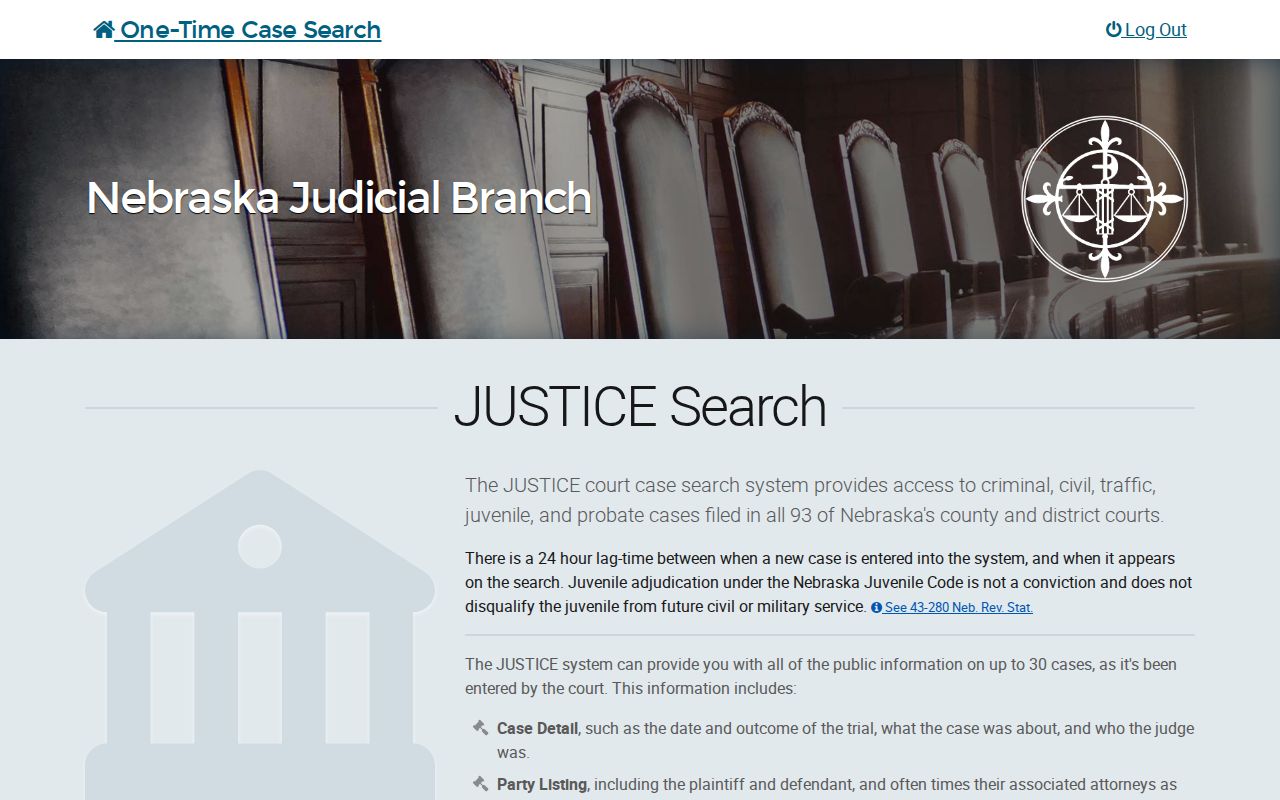
Use what comes back to identify the case and its Nebraska court. Then confirm any warrant with the offices responsible for it.
JUSTICE Finds Cases, Not Warrants
Not sure which county or court holds the file? JUSTICE is built for that. The Nebraska Judicial Branch publishes public County and District Court case information for all 93 counties. What a search returns depends on the access type, but results can carry a case summary, the parties, criminal offense details, financial information, the register of actions, judge notes where offered, and links to filed documents. It is a strong tool for tracing the court file behind a matter. What it will not hand you is a uniform warrant record with current service status, so treat any hit as case information rather than a warrant check. The Nebraska Judicial Branch's Case Information eServices overview lays out the statewide trial-court searches and notes the free access available at courthouse kiosks or law libraries.
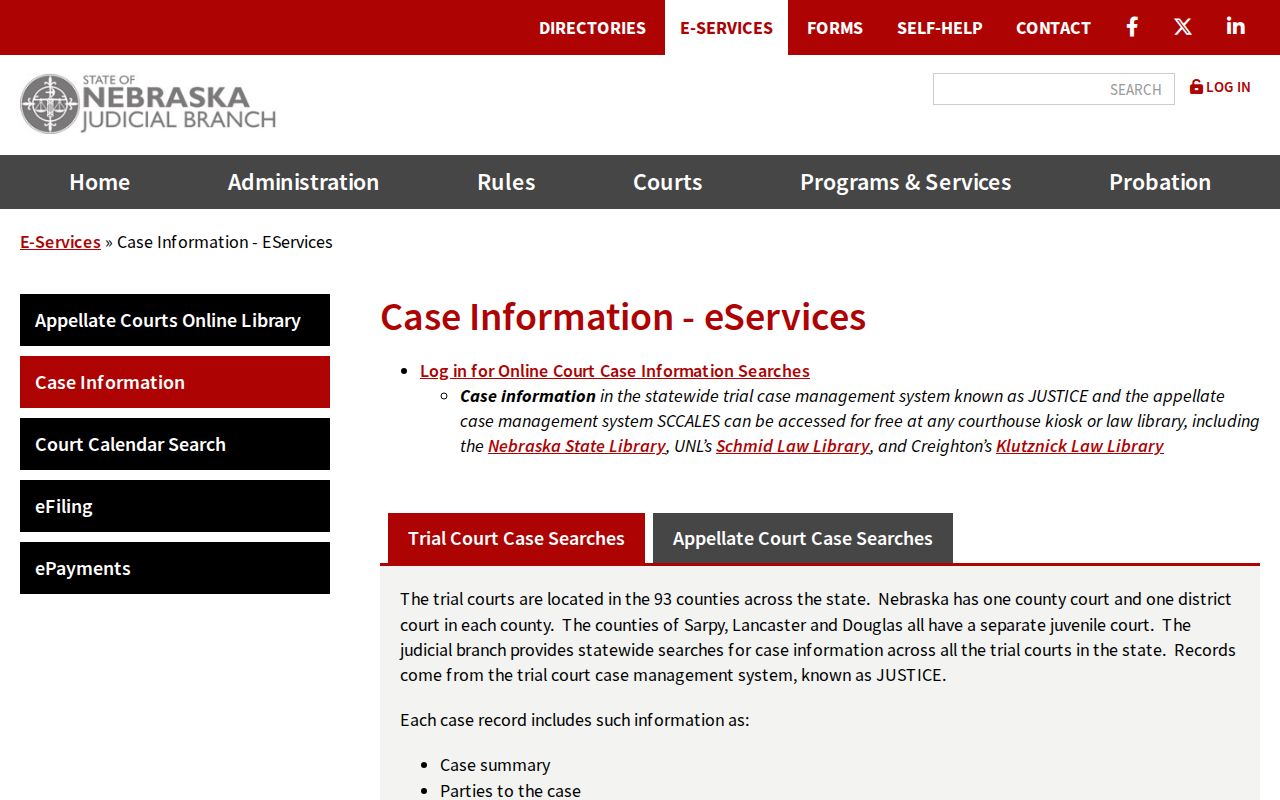
JUSTICE is built for finding cases, not for confirming an active warrant, so treat any name search there as a case lookup rather than a warrant status check. A one-time name search runs $17 and returns up to 30 case records with a three-day viewing window. Expect a 24-hour lag between a new case being entered and appearing online. Subscriber general case-list searches are free; opening a case detail costs $2 under the schedule effective January 1, 2026. The access terms also limit redistributing what you pull online. Skip the online fee entirely by using JUSTICE at a courthouse terminal or one of the listed law-library public terminals. Those stations show the public case service only, not sealed or juvenile material and not a clerk's real-time warrant confirmation. Spelling variations plus county or case criteria can help you locate a file, though any result is case information and nothing more. The Nebraska court records search policy explains how staff search specifically identified files and notes that court employees will not certify that a search came back empty.
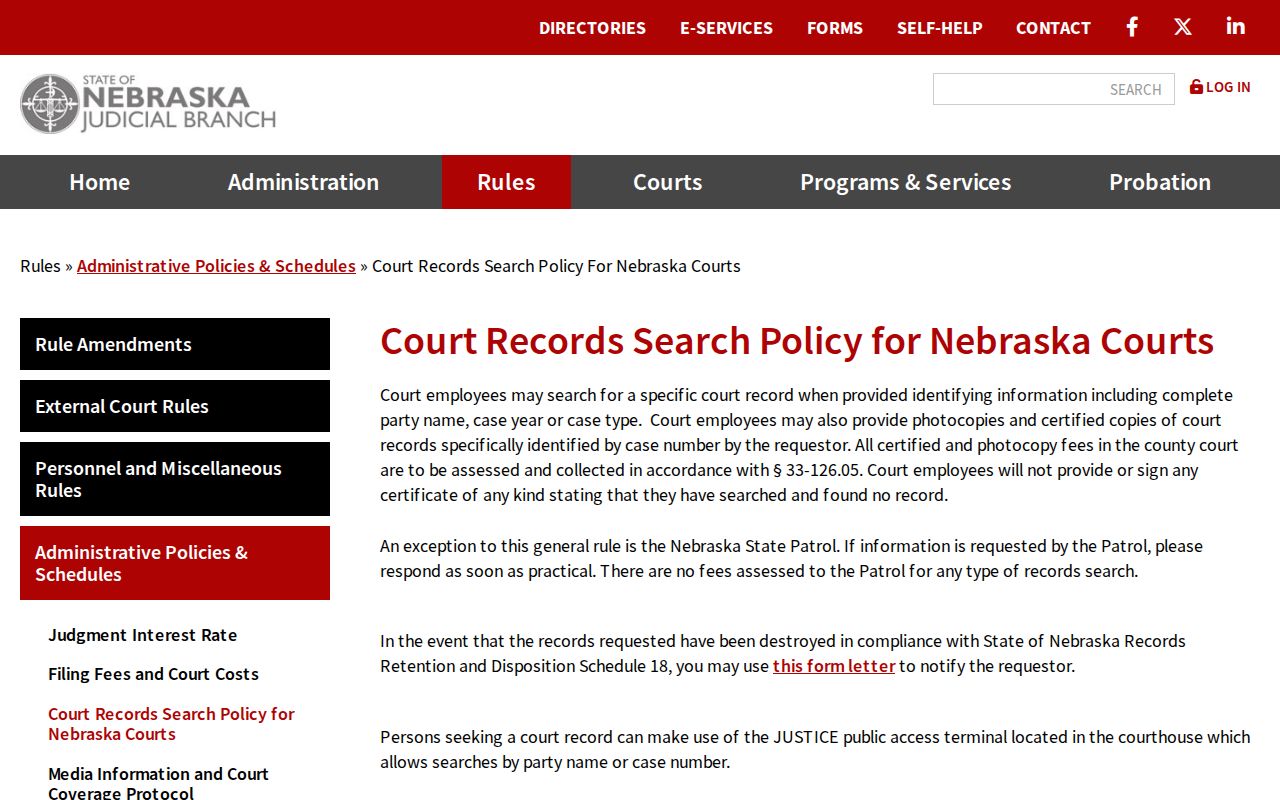
That limit matters for a Nebraska warrant check. A case result, an empty result, or a missing docket line settles nothing about current warrant status on its own.
Nebraska Warrant Search Results
A Nebraska warrant search can return a court case, a local sheriff listing, or nothing at all. No consistent statewide warrant row comes back. Hall County's printable report is one local example of the fields that may appear. Other Nebraska offices use different layouts. Some publish no list at all. Treat the field checklist as a tool for reading a record after the office confirms what that record actually contains.
| Case or warrant number | County-specific format No universal Nebraska warrant-number format was verified. Use the court or report's own label. |
|---|---|
| Party name | Name information may help match a public entry, but spelling, identifiers, and privacy limits vary by source. |
| Case basis | A case summary or local list may identify an offense, process type, or wanted-for description; these fields are not uniform. |
| Issuing court | Confirm whether the matter belongs to County Court, District Court, or a separate Juvenile Court with restricted access. |
| Bond and conditions | Bond may be set in the case order. Ask the issuing court or custody office for current terms. |
| Status and return | Only the responsible court and serving agency can reconcile a recall order with service or return activity. |
Hall's report includes issue and expiry fields, process type, crime class, physical-description headings, and a wanted-for description. That is a local schema. It is not a standard Nebraska export. The site leaves its WAR and BWA labels undefined. Neither should be read as a statewide code. An "expiry" field does not end an unserved warrant on its own. Only the issuing court can confirm that.
Free Courthouse Access vs Online Search
For a Nebraska case lookup, the choice is online convenience or free public terminal access at the courthouse. The listed charges belong to the court's case-search service. They are not warrant-search fees. Paying them does not pay or clear a warrant. Fees and procedures change, so follow the Judicial Branch's current instructions before searching.
| JUSTICE access route | Cost and access | What it provides |
|---|---|---|
| One-time party-name search | $17; up to 30 records and a three-day viewing window | Public court case information, with a described 24-hour entry lag. |
| Courthouse or listed law-library terminal | Free public access at listed terminals | The same public case information, subject to access limits. |
| Subscriber general search | General case-list query free; case detail $2 under the Jan. 1, 2026 schedule | Case criteria and detail, not live warrant status. |
An empty result is not a statewide all-clear. A Nebraska record can fall outside the search criteria. It can lag behind recent data entry. It can sit behind an access restriction. Ask a court clerk which file or office answers the case-specific question, and for a likely local sheriff record use the county site or the official phone contact as a separate channel.
Nebraska Warrants: Who Holds What
Every Nebraska warrant traces back to the court that issued it, and that clerk holds the case and the order. County Court carries most traffic, municipal-ordinance, and misdemeanor matters along with felony preliminary hearings. Nebraska retired its separate municipal-court and justice-of-the-peace tier years ago. If an old file carries a police-magistrate or municipal-court label, trace it forward to the current County Court case; a city police department may still keep a service copy. After bindover, a felony moves to District Court. Douglas, Lancaster, and Sarpy Counties also run separate Juvenile Courts with special access limits on their records. So confirm which court actually holds the case instead of assuming every warrant goes to the same clerk. On the service side, an arrest warrant is directed to a county sheriff or a city or village marshal or other police officer under Nebraska Revised Statute §29-406. Section §29-407 covers who may execute process, including statewide execution by a person the judge's order names. That reach does not create any statewide public posting duty. JUSTICE may show the case record, but it cannot replace the clerk's explanation of the order itself. A sheriff or the named city officer can say whether that agency holds the process or has served it. For a matter already in custody, a jail or bond window answers local booking and payment questions. Each office holds a different piece of the record, so ask each one the question that fits its role. The county directory points you toward the likely court and sheriff.
Nebraska County Warrant Lists Stay Local
Some Nebraska law-enforcement offices publish local warrant pages. Nothing joins them into one Nebraska form. No statewide county selector exists. Hall County's sheriff page says its outstanding-arrest list is updated hourly, with name search and A-to-Z browsing. Lancaster County's Lincoln Police and sheriff listing carries its own fields and local labels. Sarpy County runs a separate name-oriented search. Each listing stays inside its own jurisdiction or program. Each carries its own scope and freshness statement. A county list may leave out new, unserved, sealed, juvenile, or nonparticipating-agency process. Not every Nebraska sheriff feeds every warrant to a public list. No shared county refresh schedule exists either. A name missing from one county page settles nothing about another court, another county, or an unpublished record. If a page posts a phone number, call it. Ask whether the entry is current and which court issued it. Local codes resist personal interpretation. The source may not define them. For a Nebraska county with no searchable list, direct contact or a specific public-record request is the available route.
Which Nebraska Warrants Stay Restricted
Nebraska court records are generally public unless a law, rule, or court order closes them. Court Rule §1-808 bars sealed records and other legally confidential material. Nebraska juvenile records follow separate access and sealing rules under §43-2,108 and §43-2,108.05. Treat them differently from adult warrant entries. Search-warrant applications and supporting material stay confidential until execution under §29-817. That rule covers search warrants only. No blanket rule makes every unserved Nebraska arrest warrant confidential. Nor does service automatically make one public. Don't stretch the search-warrant rule to other process. The Nebraska court rule on excluded records spells out which categories are not open to public access.
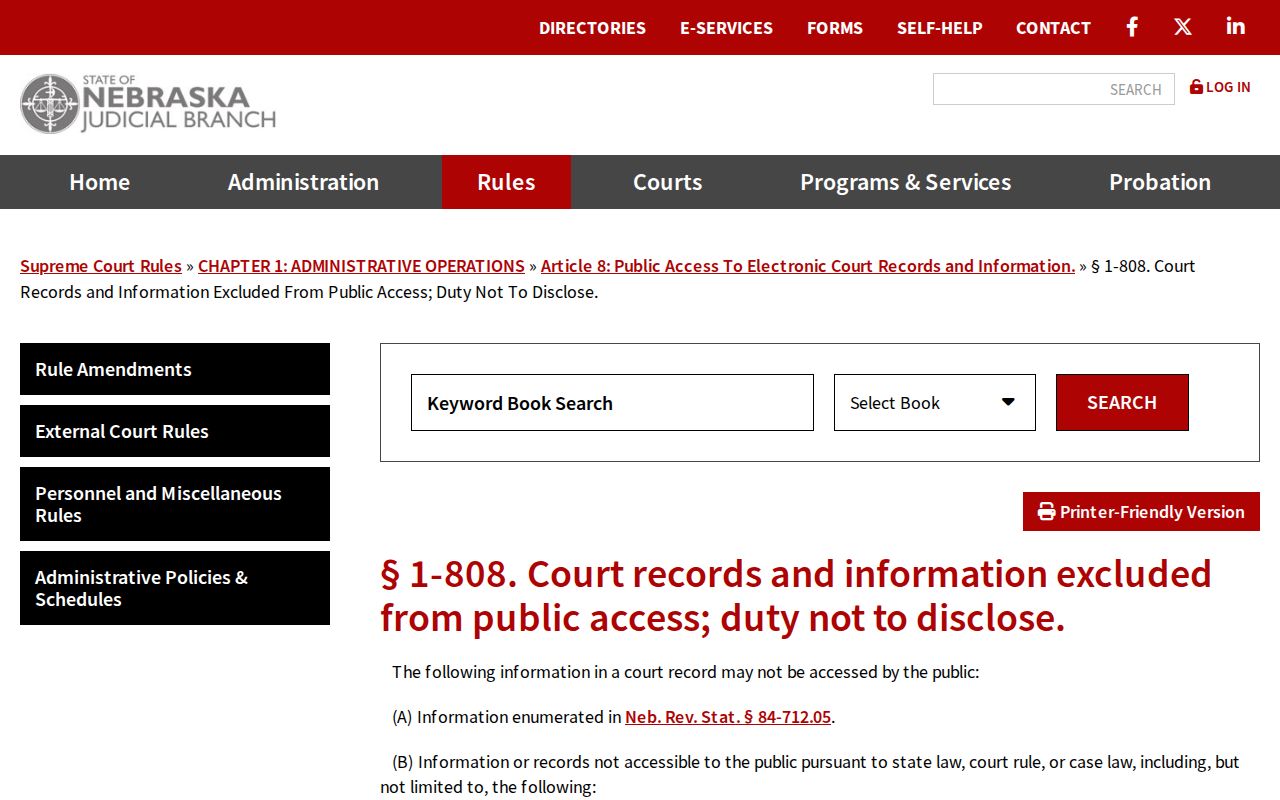
Ask the clerk about a releasable part of a specific Nebraska warrant file. A restriction does not say whether separate process is active.
Access limits: Sealed and juvenile records may be withheld. Search-warrant application material stays confidential until execution. These limits do not prove that a separate arrest or bench warrant is absent.
Nebraska Public-Record Requests Have Limits
Nebraska lets you ask for records in writing under the Nebraska Public Records Act, §84-712. The law covers records that already exist. It does not force anyone to build something new. A custodian has four business days to respond. The response can grant access or copies. It can also be a written denial citing the legal basis, or an explanation of a delay with the earliest practical date. Think of the four days as a first-reply rule, not a promise that a complex request gets finished that fast. Ask for a specific document a known court or agency holds. A releasable warrant order, a return, or a case file all fit. What a request cannot do is act as a live warrant query. No custodian has to create a statewide list or print you a "no warrant" certificate. Nebraska law also allows agencies to withhold active law-enforcement material, safety information, sealed files, juvenile records, and other protected categories, all listed in §84-712.05. The State Patrol runs its own public-record request center for the files it keeps. The Nebraska State Patrol request portal is that records route, nothing more. It is not an active-warrant lookup. Its forms load dynamically, and the Patrol states plainly that it need not create a record that does not exist. State Patrol fee rules apply only to State Patrol records, so do not confuse them with county sheriff fees. That portal page shows the request options for Patrol files; it does not search court warrants held by Nebraska counties.
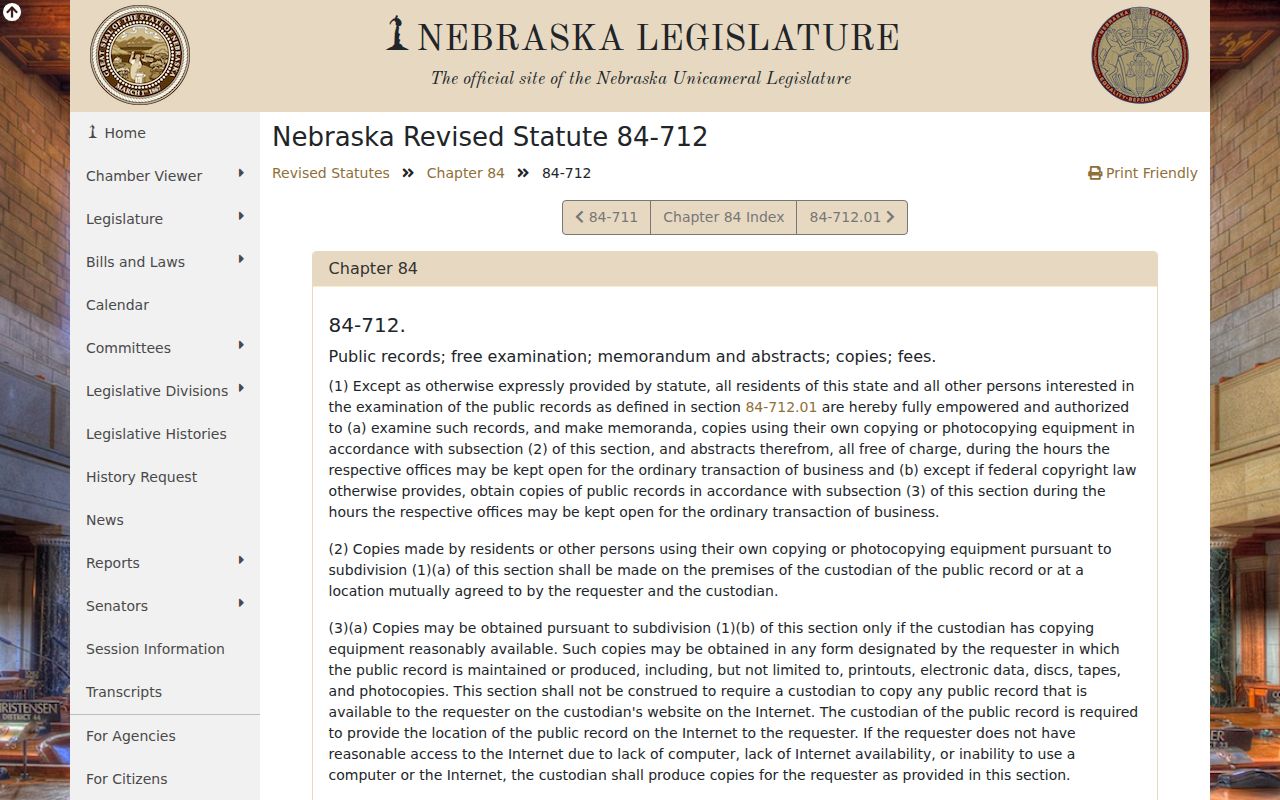
This Nebraska statute covers access to records that already exist, and its court and law-enforcement exceptions still control what gets released.
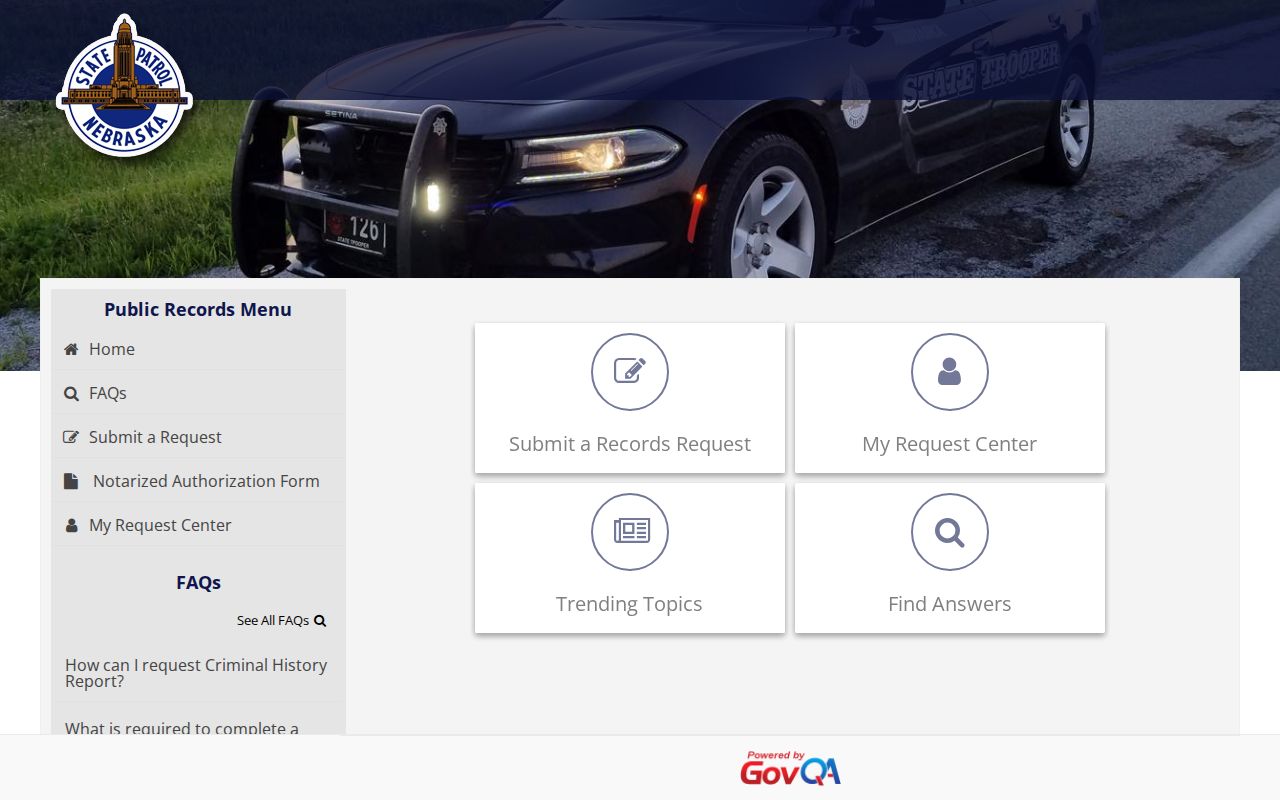
The State Patrol portal handles requests for Patrol files. It does not search court warrants held by Nebraska counties.