
How Arrest Warrants Work in Nebraska
An arrest warrant is a judge's written command. It tells an officer to arrest the person named in it. Before issuing one, a Nebraska court weighs a criminal complaint and the probable-cause basis behind it. The order ties to one case. It is not a general notice of a criminal history. It also differs from a search warrant, which authorizes a search for specific property or evidence and moves through a separate statutory process in Nebraska law.
Where the case sits depends on its level. County Court handles most misdemeanor and traffic cases and also conducts preliminary hearings in felony cases. When a felony is bound over after that hearing, the trial moves to District Court. A warrant can thus follow a case that shifts court levels on its way through the system. Ask the issuing court which order controls. The serving agency can confirm its own service record. Nebraska law sets the statewide framework, yet the case file and its current status stay local to the court that holds them.
Nebraska's Complaint-to-Warrant Path
Everything starts with a criminal complaint filed in a Nebraska court with jurisdiction. The complaint asks; it does not command. Under Neb. Rev. Stat. §29-404, the complaint-and-warrant procedure keeps issuance inside the judicial process. A judge or magistrate reviews the application. In Nebraska, a police request alone is never the warrant. The judge's decision becomes an order. Later hearings, bond terms, service returns, and any recall action all attach to that same file. The warrant itself is directed to an officer the statute and the order name. That officer answers for service. Complaint, signed warrant, and return are three distinct pieces of one Nebraska case history. A public docket entry may identify the case or its next hearing. It is not the full warrant instrument. It may not show the order is still enforceable today. Ask the Nebraska clerk which entries reflect the signed order and whether later orders changed its status. Keep the Nebraska sequence straight: complaint, judicial review, warrant order, service, and court action after service. Each step makes its own record. No online result replaces all of them. The statute sets the process, but the issuing court explains how it applies to a specific case.
Arrest Warrants: What They Contain
Nebraska uses no statewide warrant form and no universal warrant-number pattern. One Nebraska case, two labels. A case may carry a court or case number in JUSTICE and a different local identifier in a sheriff's record. Call whichever office you are dealing with. Ask which number it wants. A field reading "active," "served," or "returned" means whatever that record keeper defines it to mean, not a statewide code.
| Warrant or case number | The court's case identifier and any separate process number used by the local clerk or serving agency. No statewide arrest-warrant format was verified. |
|---|---|
| Named person | The person identified in the order. Contact the custodian if name spelling or another case detail needs to be checked. |
| Charge or basis | The case offense or legal basis connected to the order. Read it with the complaint and later court entries. |
| Issuing court and judge | The court and judicial officer responsible for the order; these details identify where to ask about a hearing or recall. |
| Bond terms | A bond amount or type if set. Terms come from the court's order and can change; there is no fixed statewide amount by charge label. |
| Issue and service dates | The date the order was issued and any service or return entry. A return is an officer's record of process, not the judicial order itself. |
Treat these fields as a reading checklist, not a guaranteed Nebraska form. A sheriff's local list may omit the signed order. A court docket may lag on service updates. Ask the clerk which entry is the operative order, and ask the serving agency how it records a return.
Nebraska Warrant Orders and Returns
The judge's order and the officer's return answer different questions. The order shows what a Nebraska court authorized. The return reports what the serving officer did with that process. Service is one possible outcome; another may be entered in the local file. A clerk explains the court entries. The sheriff or named police agency confirms its service record. Neither Nebraska office always has the other's latest update. Check both when the record matters. The Nebraska Judicial Branch's Hall County Court page is one local example of a court-contact page, not a statewide warrant list; county pages supply the local clerk and court route that a statewide hub cannot replace.
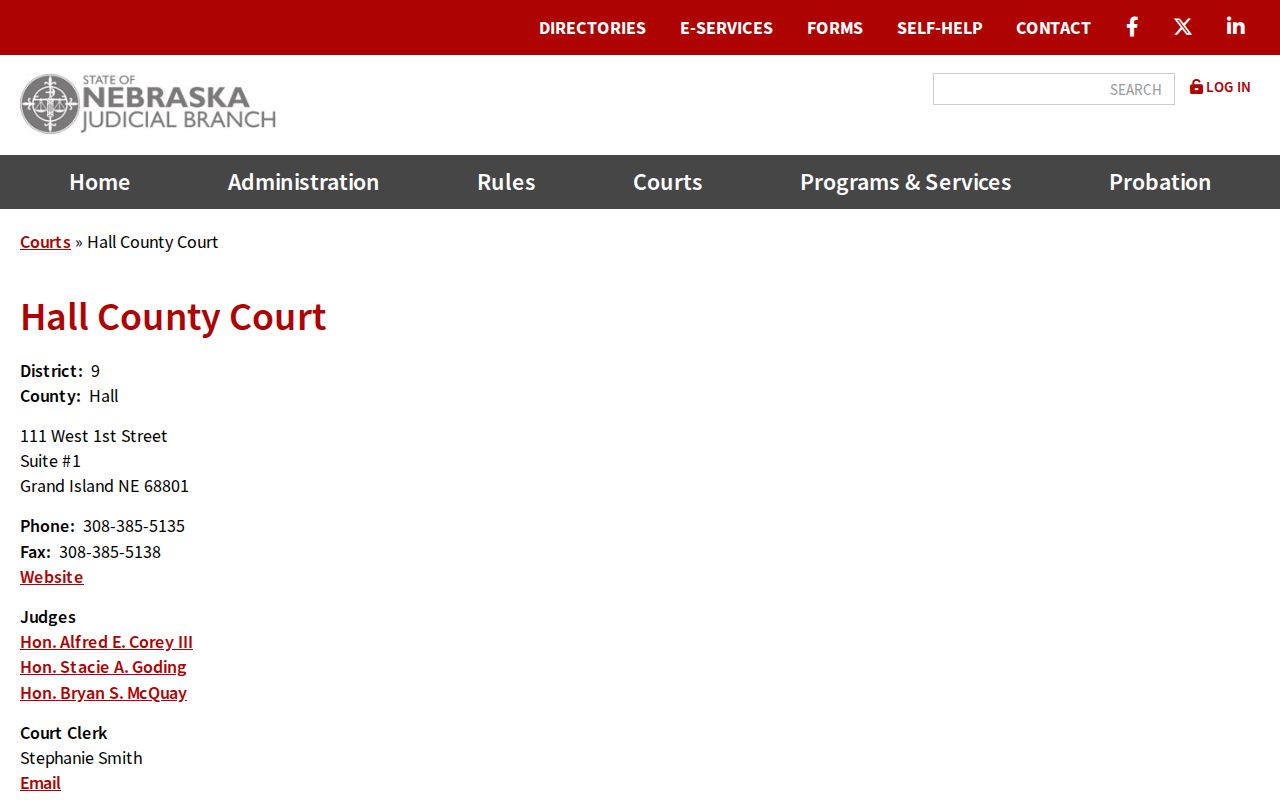
A county court office is the natural first stop for a local Nebraska warrant question. The state's public case access is handy for pulling a docket and reading filed papers. It is not the full law-enforcement record, though. A sheriff's list, where a Nebraska county posts one, runs as a separate channel with its own scope and its own update habits. So work both. Ask the issuing court first whether the judge has recalled or changed the order. Then ask the agency whether it received that order and updated its return or service record. A payment receipt or an old list entry can sit beside a newer judicial decision, and only the court can tell you which one controls. The Nebraska Public Records Act also covers requests for releasable records from their custodian, subject to exemptions. A written request helps when you need a copy or an unresolved record question answered. The four-business-day initial response framework in §84-712 is not an emergency warrant-status service. Sealed records and juvenile matters carry extra limits in Nebraska courts. Ask the court or agency which specific document it holds and whether it can be released. Note: A public list can help locate a lead, but only the issuing court can confirm the current judicial order.
How Warrants Get Served in Nebraska
A Nebraska arrest warrant under Neb. Rev. Stat. §29-406 goes to the county sheriff, or to a city or village marshal, or to another police officer. The officer must take the accused before the issuing court or another court with jurisdiction. Notice which agency the order names. The clerk keeps the court file. The named officer or agency handles service and records what happened. Section 29-407 goes further. It lets a person named by the magistrate execute the warrant anywhere within Nebraska as provided by law. That is statewide authority to act, not a public Nebraska warrant list. It does not prove every warrant sits in every law-enforcement system either. And it does not make the Nebraska State Patrol a substitute for the issuing court. The Patrol serves all of Nebraska. It publishes no public active-warrant database or roster. After an arrest, the person goes before a magistrate or court, where the case, counsel, and release conditions get sorted out. The warrant's bond, if any, is case-specific. A bond is not a fine. Paying a court balance does not by itself show that an arrest order was recalled in Nebraska. Ask the clerk what the court ordered. Ask the serving agency whether it recorded service or received a later order. Note: The statute's statewide execution rule does not create a statewide public search channel.
JUSTICE and Nebraska Warrant Status
JUSTICE is the public case-search side of Nebraska's statewide trial-court system. Use it to find County Court and District Court case information: case summaries, parties, offense details, financial entries, register-of-actions entries, and many filed documents. It is not an active-warrant register. It gives no "warrant clear" result and no official certificate that no warrant exists. A case with no visible warrant entry, in other words, is not an all-clear. The Nebraska Judicial Branch case-information service lays out the statewide court-search routes. A one-time party-name search costs $17 and returns up to 30 case records, with a three-day viewing window under the schedule effective January 1, 2026. The Judicial Branch describes a 24-hour lag between case entry and appearing online. Access is free at terminals listed for Nebraska courthouses and law libraries. Subscriber list searches are free. A case-detail view costs $2. Those fees and windows buy court case information, not warrant clearance for a Nebraska warrant check. JUSTICE access also follows confidentiality rules. Juvenile records in Douglas, Lancaster, and Sarpy Counties belong to separate Juvenile Courts and stay restricted by law and court rules. Search-warrant applications and supporting materials stay confidential until execution under Neb. Rev. Stat. §29-817. Neither gap should be read as a missing entry in an adult arrest-warrant search. The Judicial Branch's court-records information page points Nebraska readers toward official court-record resources rather than a warrant-status screen.
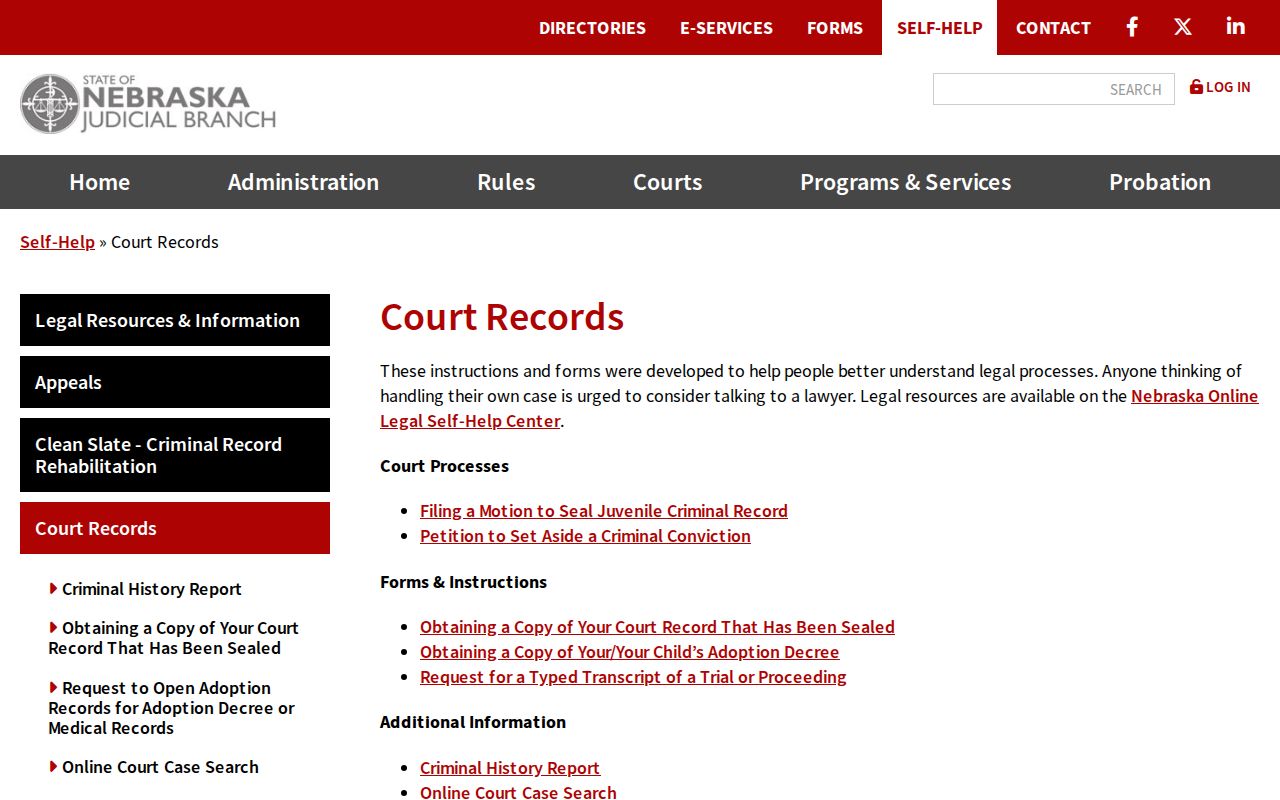
Use the state court search to find a likely case. That is only step one. Then call the clerk of the Nebraska court and the right sheriff or city police agency to confirm current process. The Judicial Branch's court-record search policy explains how public case searches work and where their results stop.
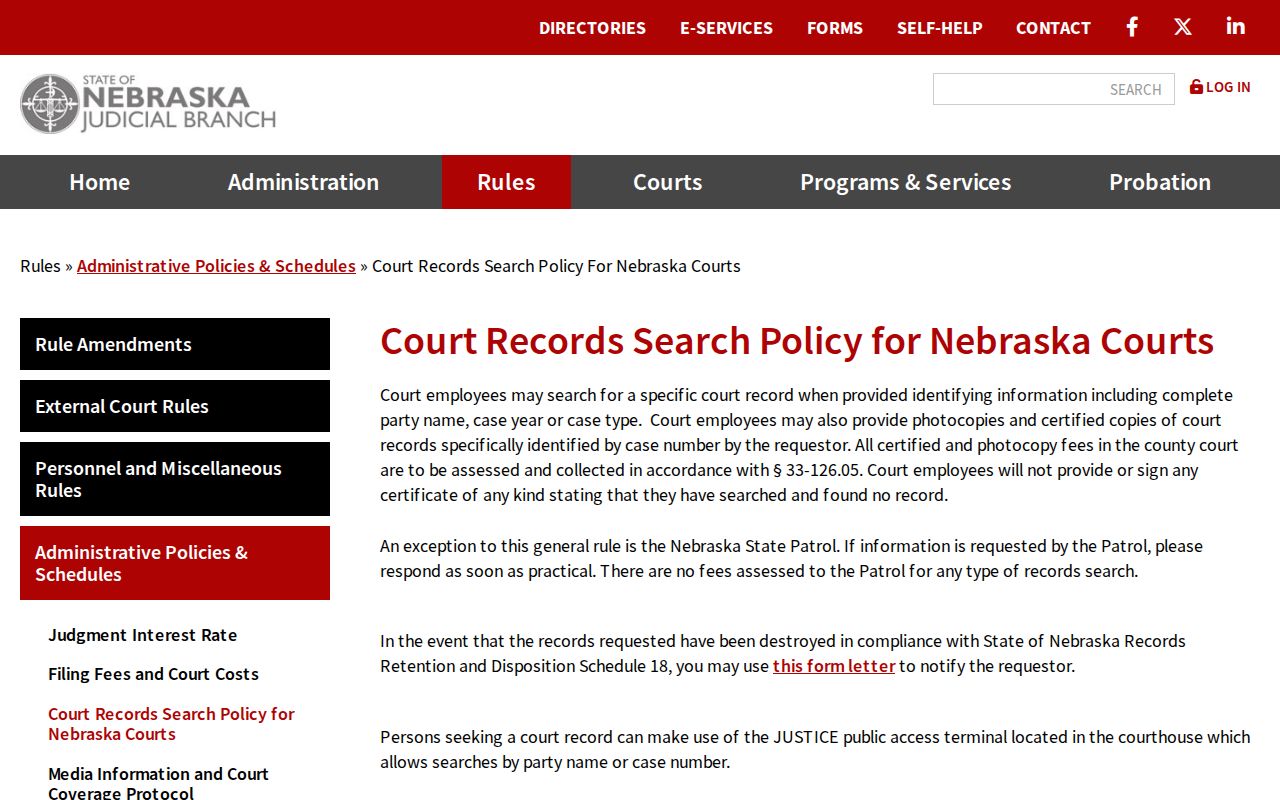
Treat the policy page as an access reference. Nothing there settles warrant status. The Judicial Branch also publishes Neb. Ct. R. §1-808, which sets out the categories of Nebraska court records excluded from public access.
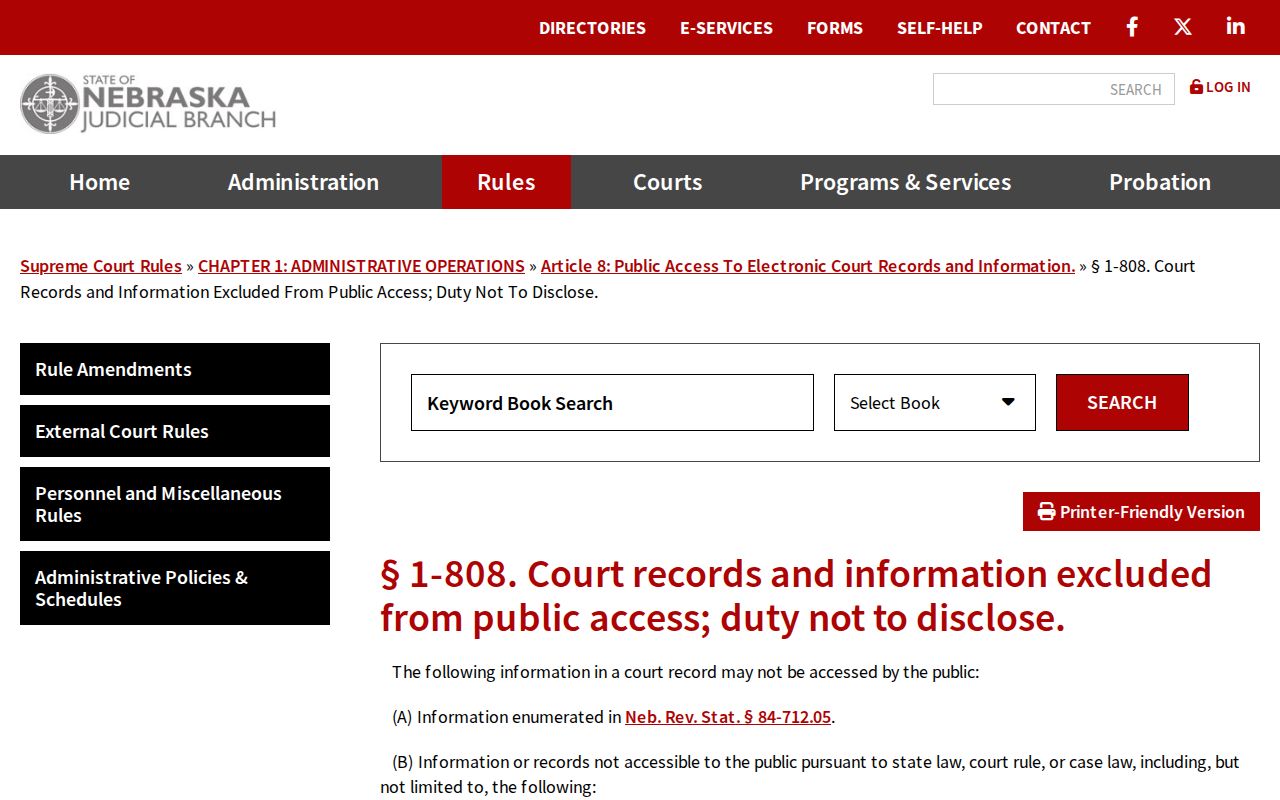
Confidentiality limits keep some records out of public search. A missing entry is not an official no-warrant finding. Note: Nebraska case information helps locate a file, but it does not confirm current service or recall status.
Arrest Warrants, Summonses, and Bench Warrants
Nebraska splits these orders into three distinct tools. An arrest warrant follows a complaint and a judicial finding of probable cause. A summons works differently. It directs a person to answer a case without ordering an arrest. A bench warrant is process inside an existing case, usually after a missed appearance or a failure to comply. The Nebraska court that issued the bench warrant decides what happens next, based on the case and its order. The Bench Warrant Lookup covers that separate missed-court path.
| Question | Arrest warrant | Summons | Bench warrant |
|---|---|---|---|
| What it does | Directs an officer to arrest the accused and bring them before a court. | Requires a response or appearance as stated in the notice. | Directs action in an existing case, commonly after nonappearance or noncompliance. |
| Why issued | A complaint and judicial probable-cause review. | A court process that calls for a response without an arrest order. | A missed obligation or other court-directed reason, according to the case order. |
| Who controls the record | The issuing court controls the order; the named officer serves it. | The court handling the case controls the notice and response date. | The issuing judge controls recall, hearing, and case conditions. |
| What to confirm | Current status, bond, court, and serving agency. | Deadline, appearance requirement, and next step. | Whether it remains active, whether recall was ordered, and how to appear. |
Don't collapse these into one Nebraska warrant search. A summons can lead to more court action if a required appearance is missed. What happens then depends on the court and the case. An arrest warrant is not a search warrant. A bench warrant is not a statewide code for every unpaid ticket in Nebraska. Read the order. Confirm the issuing court, and ask the clerk what action remains due.
Nebraska Felony Warrants and Court Changes
A felony in Nebraska can cross two trial-court levels. A criminal complaint often starts in County Court, which holds the preliminary hearing. Find probable cause there and the case is bound over to District Court for trial. Misdemeanor and traffic cases usually stay put. The move says nothing about any warrant. A warrant may or may not follow the file. Check the docket. Ask the clerk which court controls the order now. Nebraska runs 93 County Courts and 93 District Courts across 12 judicial districts. Those are court-structure numbers. They say nothing about warrant lists or active warrants. County Court clerks and clerk magistrates hold many misdemeanor, traffic, ordinance, and preliminary-hearing files. The Clerk of the District Court keeps the felony and general-jurisdiction records. In Douglas, Lancaster, and Sarpy Counties, judicial administrators handle County Court administration. Ask which court holds the particular case rather than trusting a generic statewide label. Federal process runs on a separate track. PACER can locate a public federal docket, but it offers no live public warrant search. The U.S. District Court for Nebraska and the U.S. Marshals Service handle federal procedure. A federal docket result does not confirm a Nebraska state-court warrant, and the reverse holds too. The PACER public-access page lays out the docket-search route for finding an eligible case.
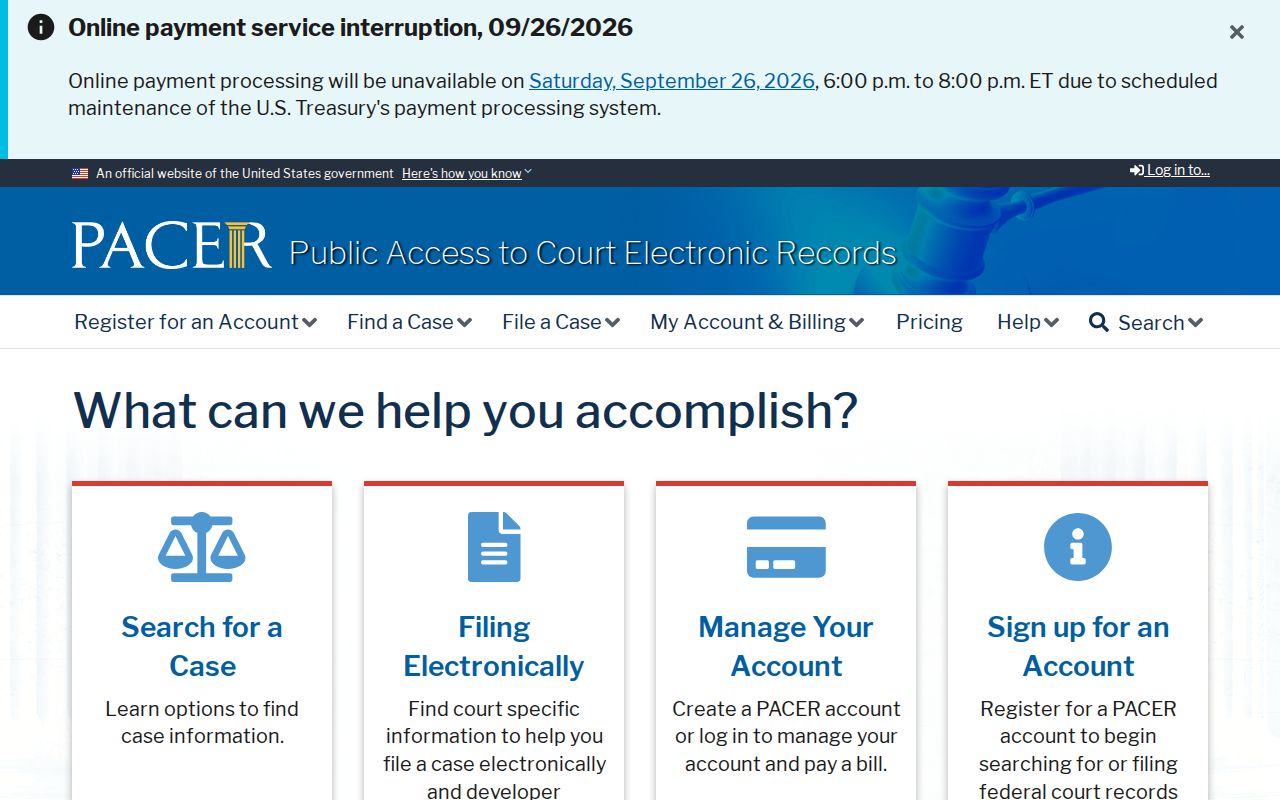
A federal docket helps you find a case. It is not a warrant-status search, and it cannot clear a Nebraska state-court order. Note: A preliminary hearing is a County Court step; a felony trial after bindover belongs to District Court.
Handling an Arrest Warrant in Your Name
Start by pinning down the county and the case number. A public JUSTICE case search can help with that. Then call the County Court or District Court clerk for that Nebraska county. Ask whether a Nebraska warrant is active right now, what order controls it, what bond or appearance terms attach, and which officer or agency is set to serve it. A call to the sheriff confirms service status. Nebraska has no single public warrant-only lookup, so the statewide county directory is the practical route to local court and sheriff contacts. Before you show up anywhere, phone the court, the sheriff, or the county jail. Ask where to report, the current hours, whether booking is expected, how an initial appearance gets arranged, what bond methods the court authorizes, and which identification or case details to bring. A lawyer can arrange a voluntary appearance, review the order, and ask the court for a hearing or a motion to recall or quash. Recall means the issuing court withdraws its warrant by order. Quash means the court sets it aside. Either step may leave the underlying charge standing.
Important: Confirm the issuing court, current status, and appearance terms before acting; an arrest warrant authorizes custody, and bond or recall depends on the judge's order.
If the judge recalls the Nebraska warrant, ask for the written order and confirm the serving agency received it. Someone already in custody? Ask how to schedule the initial appearance and post any authorized bond. Bond might be personal recognizance, a percentage bond, cash, or another court-approved form. The judge sets the terms in the case. Nebraska court ePayments does not take bond online. Confirm the approved posting location and method with the court or the jail before you go.
Nebraska Arrest Warrant Confirmation
Use each channel for the question it can answer. The court clerk can identify the case, docket, issuing order, and filing route for a recall request. The sheriff or named law-enforcement agency can check its own service or return record and explain local bond contact steps. Some county sheriffs publish local outstanding-warrant lists; others use a phone contact or records request. Those lists differ in coverage and update practice, and no local absence proves statewide absence.
For a record copy rather than urgent status, send a focused written request to the court or sheriff that holds it under the Nebraska Public Records Act. The statute's initial response framework is four business days, and exemptions may apply to sealed, juvenile, or law-enforcement material. A case calendar only covers current or future calendar information, not the full docket or warrant status. The Nebraska State Patrol's Criminal Identification Division provides criminal-history record checks, a different service that does not certify whether a live warrant is active.
When calling, have the person's legal name and spelling variants, approximate county and date, citation or court number if known, and any court notice. Ask what process title appears, whether a written recall or service return is entered, and which office can provide confirmation. Use contact information from the official Judicial Branch or county site. The Judicial Branch's court scam alert warns that courts do not demand warrant payments by phone, text, or email.
The Nebraska Judicial Branch scam alert gives examples of fake arrest-warrant demands and directs the public to rely on official court channels.
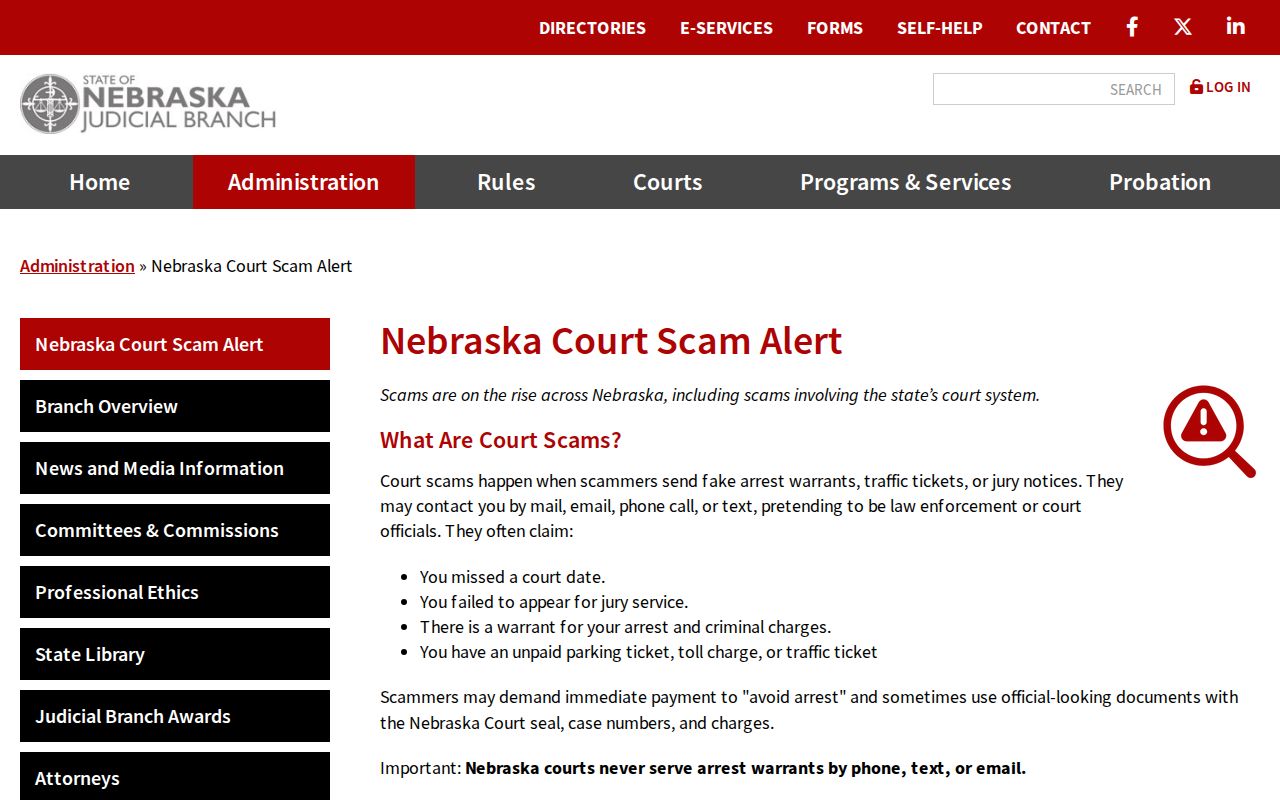
An alert is only a tip. In Nebraska, confirm any actual court order with the clerk of the issuing court and the sheriff or police agency serving the warrant, since only they can speak to what a record truly orders. Note: Use an official court or agency contact for case-specific status and instructions.