
How Bench Warrants Work in Nebraska
Every Nebraska bench warrant belongs to a case already open somewhere in court. The case drives everything. A judge signs the order when someone misses a hearing, ignores a court requirement, or triggers some other basis the law and docket allow. The reasons vary. Notice, conditions, and scope all come from the specific order. So read the docket and ask the Nebraska clerk what the judge actually entered. A missed date does not guarantee a warrant. The order is not a new charge. It gives law enforcement the process to bring the person before the judge or carry the order out. The underlying case still moves after service or recall. Fines, hearings, and support matters each sit with different clerks, so the Nebraska office you call depends on the obligation involved.
- Failure to appear (FTA)
- Not appearing when the court requires it; the judge decides the consequence in the case.
- Recalled
- Withdrawn by a court order. Ask whether the order was entered and sent to the serving agency.
- Quashed
- Set aside by the court. The underlying case may still be open.
These terms help when you talk to a clerk. They never replace the docket and the signed order.
Nebraska Bench Warrants Stay With the Case
Only the Nebraska court that issued a bench warrant controls what happens next. That judge can recall it, quash it, set a new appearance, or change a condition. The sheriff or officer named in the order may hold the service copy. That agency knows if it was served or returned. Clerk and sheriff records answer different questions. No public page in Nebraska withdraws the order. Use public case information to find the file, then ask the clerk which order controls. If the judge recalled it, ask for a written order and whether the sheriff received it. After an arrest, the jail or bond window explains custody and local bond steps in Nebraska. The court sets the legal conditions. Call before you travel or pay. A receipt proves payment, not recall. It does not prove a Nebraska judge quashed the warrant or that the serving agency updated its record. The Nebraska court can also say whether the underlying case still needs a hearing or other action.
Bench Warrant Issuance in Nebraska
Issuance starts with an open case. The Nebraska judge weighs the missed appearance or the other claimed noncompliance and enters the order that fits that case. A warrant may direct an officer to bring the person before the court. Bond is case-specific. A required appearance and other terms are too, and Nebraska sets no single statewide bond amount that covers every bench warrant. The court keeps the order in its record. Serving process is someone else's job. A sheriff, a city or village marshal, or another named officer may carry it out. Nebraska Revised Statute §29-406 directs an arrest warrant to the county sheriff or to a city or village marshal or other police officer. Section 29-407 covers execution by a person the magistrate names, with authority anywhere in Nebraska. That reach does not create a public list. Nebraska has no public warrant-only search and no shared public roster. A case may show up in JUSTICE. A public entry cannot certify service or recall. Ask the issuing court and agency directly.
No Nebraska Municipal-Warrant Portal
Nebraska runs no separate municipal-court tier today, so there is no statewide municipal warrant portal to search. City-ordinance cases go to County Court. A city police department or marshal may still serve process, and a city prosecutor may handle the case. The record still runs through county court. Older papers may carry a legacy municipal court label. Confirm the current court number and clerk first. The Nebraska Judicial Branch County Court overview describes the tier that handles county and city-origin cases.
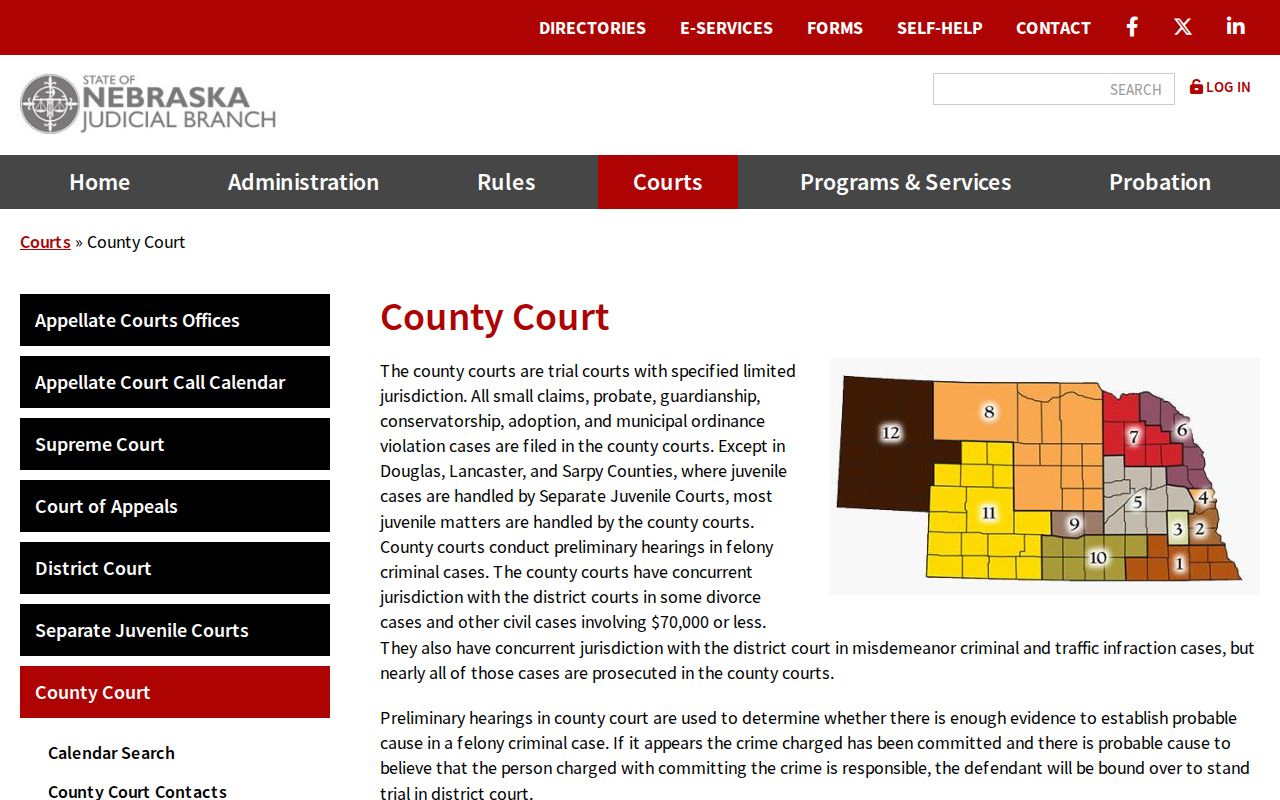
The statewide court page adds context for ordinance cases. It is not a warrant lookup for one Nebraska city. The city on a citation is only a clue. The Nebraska county court handling the case controls the docket. Ask that court whether a bench warrant was entered, then ask the sheriff or police office about a service copy. County court remains the working route for city-origin cases.
How Bench and Arrest Warrants Differ
Both orders can end in arrest. The reason and stage differ. An arrest warrant usually follows a criminal complaint and a judge's probable-cause review under §29-404. A Nebraska bench warrant instead arises inside an existing case, when the judge orders process to secure an appearance or compliance. Confirm the exact basis in the issuing court's order.
| Feature | Bench warrant | Arrest warrant |
|---|---|---|
| Usual trigger | Missed appearance or failure to meet a court obligation in an existing case. | Complaint and judicial probable-cause process for an accused offense. |
| Case link | Connected to a case already before the court. | May begin the arrest process for a charged offense. |
| Issuing authority | Judge acting in the case; conditions depend on the order. | Judge or magistrate acting on the complaint and supporting process. |
| Confirmation | Issuing court for recall or hearing; serving agency for service status. | Issuing court and the sheriff or other officer named to serve it. |
A search warrant is a different animal: it authorizes a search for property or evidence. A Nebraska bench or arrest warrant is not that. The order filed in the specific case, not a label, controls what happens next. For the complaint-based route, see Arrest Warrant Lookup.
Nebraska Child-Support Warrant Forms
Nebraska handles child-support bench-warrant requests on specialized court forms. Form DC 6:5.25 is the motion and affidavit, DC 6:5.25a gives instructions, and DC 6:5.26 is the proposed bench warrant. Together they sketch a court-driven family enforcement process, not a public warrant search, and they have nothing to do with a traffic citation or an ordinary criminal case. The motion and affidavit identify the court, the county, the civil case, the parties, the contempt order, the purge-payment terms, the payment history, the requested process, and the sworn facts. The proposed order carries the case and party details, the judge's action, the service direction, and the subject description fields. Remember that a proposed form is only a request. It becomes an issued warrant only if the court acts on it. The current family-law forms sit in the official Nebraska Judicial Branch forms index. Anyone named in a Nebraska child-support matter should call the issuing court, the state child-support agency, or counsel to learn what proof, payment, or hearing is required. These forms are not a self-service way to search for, or recall, some other kind of warrant.
Clearing a Bench Warrant in Nebraska
Recall belongs to the issuing court alone. Nebraska publishes no statewide recall form, standard fee, or universal walk-in process. Identify the case first, confirm the warrant is still active, then follow that court's instructions for a motion, an appearance, payment, or a hearing. A lawyer can arrange the appearance or advise whether to seek recall or quash instead.
- Use the public case search, when available, to find the case and issuing court. Then call the clerk and ask whether the warrant is active, whether a recall order is entered, and which agency holds it.
- Ask the court how to request recall or quash, whether a motion or hearing is needed, and what explanation or proof should be filed. The judge decides whether to withdraw the order.
- If planning to appear in person, call the court, sheriff, or jail first. Confirm location, intake hours, whether booking occurs, what identification or case details are needed, and how an initial appearance will be set.
- Ask about the underlying obligation, including a payment plan, new date, or other court-approved option. Do not assume an online payment cancels the warrant.
- Get the written disposition or recall order and ask whether the sheriff received notice or returned the warrant. Keep the next hearing date even after release.
Caution: A bench warrant does not disappear because a date passed or a payment posted. It may be served later, and the underlying case can remain open after recall.
Nebraska Fine Warrants and §29-2412
When a Nebraska warrant rests on unpaid fines or costs, ask the court whether Nebraska Revised Statute §29-2412 applies. In a qualifying case, a person arrested on a fine-or-cost warrant gets an ability-to-pay hearing at the first regular court date after arrest. The statute lets the court order installments, community service, discharge, or modification, depending on its findings. That is not an automatic waiver. Nor is it a blanket rule for every warrant. The judge reviews the person's circumstances and picks the option that fits, if any fits at all. Ask the clerk how the hearing gets set and what financial documents to bring. Nebraska courts may use their own term for this process, so rely on the court's exact wording rather than assuming a label. One more Nebraska wrinkle: a missed traffic date can trigger a separate DMV citation-compliance suspension, but that license consequence is not the warrant itself. Paying through a court portal may satisfy the money due yet leave the judicial process standing. Confirm separately with the issuing court whether the warrant remains active and whether the sheriff has received a recall order.
Nebraska Courts That Issue Bench Warrants
Case type points toward the likely Nebraska court, but the docket names the court that actually issued a particular bench warrant. County Court handles most misdemeanor, traffic, and municipal-ordinance cases, and it holds felony preliminary hearings. Once a felony is bound over, the trial moves to District Court. Douglas, Lancaster, and Sarpy Counties run separate Juvenile Courts, where access to juvenile matters is restricted. Call the clerk responsible for the case rather than assuming a sheriff's list points to the right court.
| Court level | Common case route | Record contact |
|---|---|---|
| County Court | Most misdemeanors, traffic, ordinance cases, and felony preliminary hearings. | County Court clerk magistrate; judicial administrator in Douglas, Lancaster, and Sarpy Counties. |
| District Court | Felony matters after bindover and other general-jurisdiction cases. | Clerk of the District Court. |
| Separate Juvenile Court | Juvenile cases in Douglas, Lancaster, and Sarpy Counties. | Juvenile court administration; access is restricted. |
The Judicial Branch trial-court contacts page routes you to Nebraska county and district offices. For a specific case, Browse Counties leads to the local court and sheriff. The Hall County Court page shows how one county presents its court contact information.
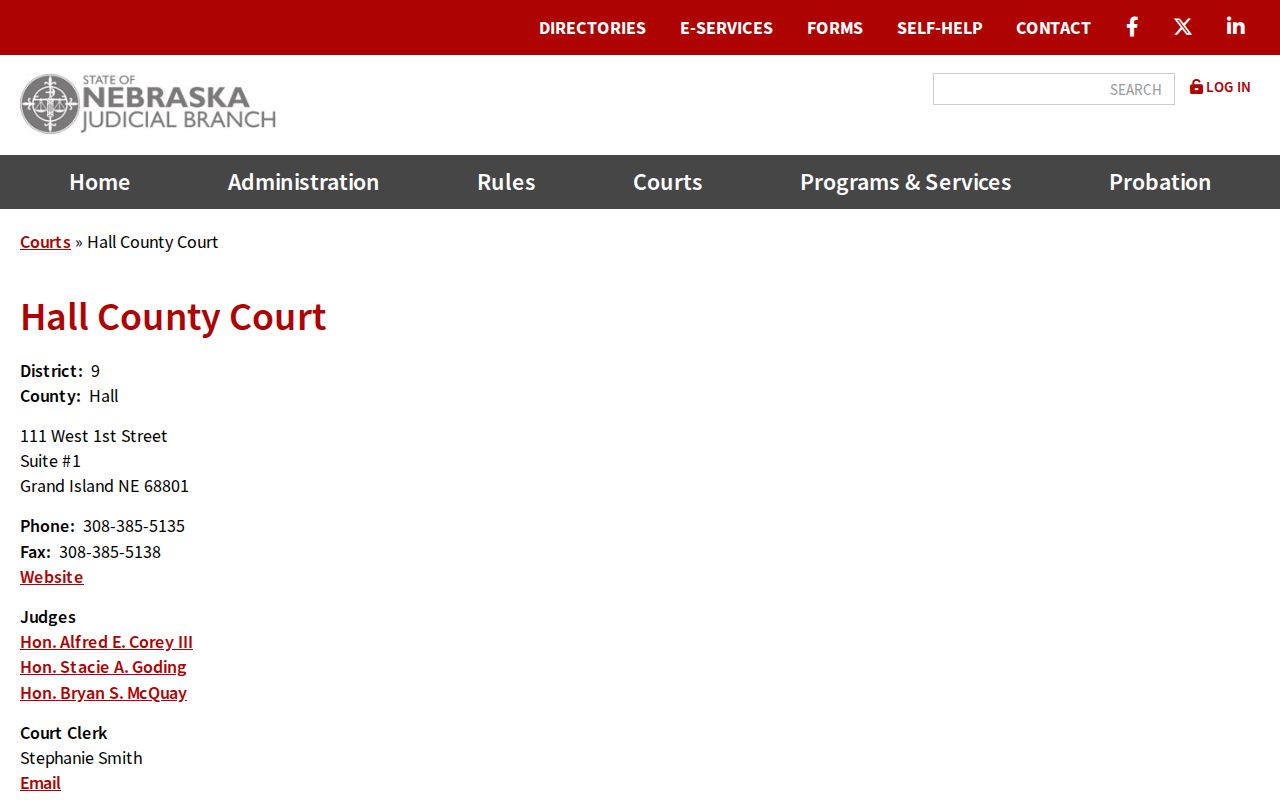
One county page is just one example. Use Nebraska's statewide directory to find the clerk for the case at hand.
Nebraska Bench-Warrant Bond Terms
A judge sets the release terms case by case. Nebraska's initial-appearance guide describes personal-recognizance release and percentage bonds, but it promises neither in every case. A bench warrant may carry a set bond, or it may require a new appearance before the judge sets terms. Ask the issuing court or jail which order applies before you travel or arrange payment. On personal recognizance, the person signs a promise to appear and follow conditions, with no upfront deposit. A 10-percent appearance bond means depositing 10 percent of the stated bond amount. The court keeps 10 percent of that deposit as appearance-bond costs under the published Nebraska court fee schedule; the case order and the law govern how the rest returns. Cash or surety terms also turn on the judge's order. Nebraska's public guide notes that commercial bail bondsmen are not used the way they are in some states, and the Judicial Branch's ePayments instructions say online bond payments are not accepted.
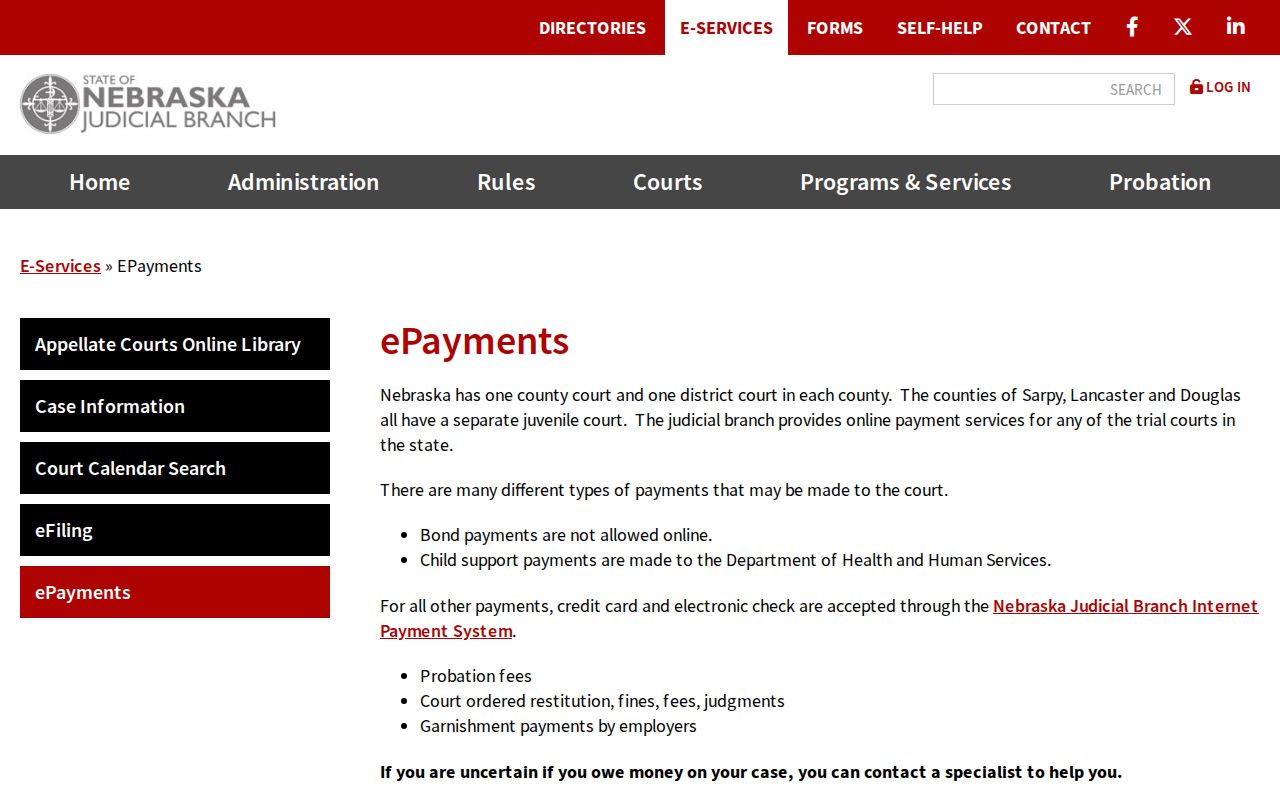
A fine payment and a bond deposit are not the same transaction. Call the Nebraska court or county jail for the current bond type, accepted payment method, window hours, receipt rules, and release conditions.
Call Before a Nebraska Walk-In Appearance
Nebraska has no single surrender counter and no walk-in docket that covers every bench warrant. Each court sets its own practice. The judge's order, the bond amount, and the person's custody status all shape what happens next. So call first. Ask where to report, whether booking is expected, and what hours apply. Ask how bond can be posted and when the initial appearance will happen. A lawyer can often reach the court ahead of time to arrange a smoother appearance or file a motion. Special events are another matter, and they stay local. The City of Grand Island ran a Hall County Warrant Wipeout Day on August 21, 2026, under its own terms. That was a one-time local event, not a statewide Nebraska program or a recurring promise, and the official Grand Island announcement spells out those terms in full.
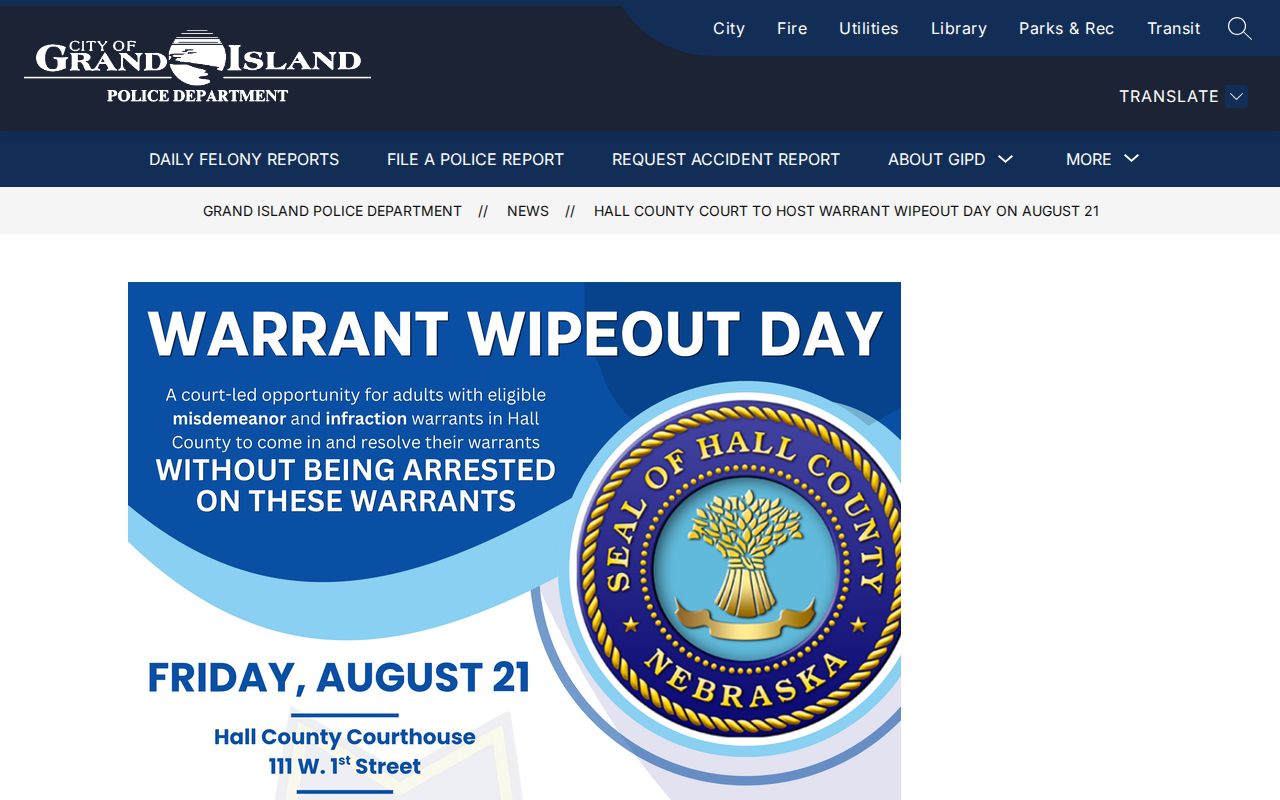
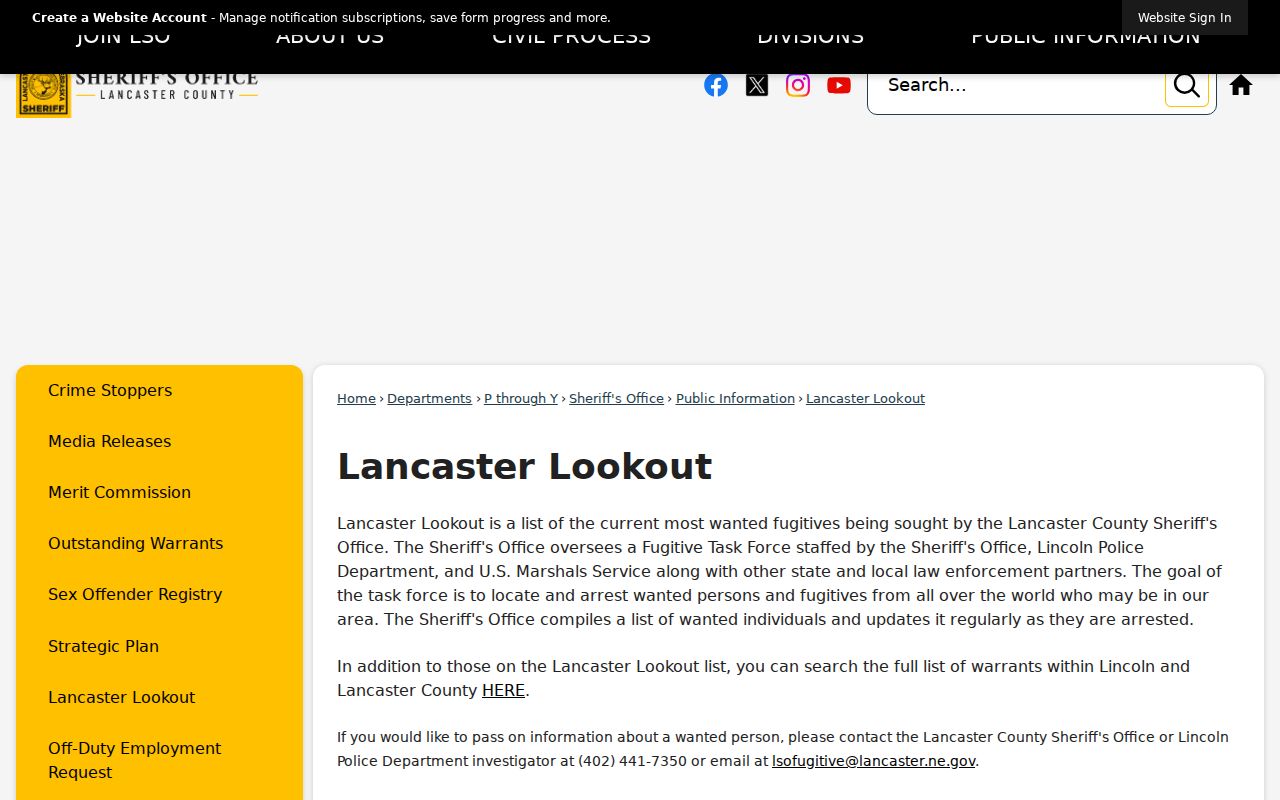
Special appearance events change their terms often, so always read the current local court notice before you count on one in Nebraska. Lancaster Lookout is Lancaster County's own program, with eligibility rules and procedures it sets itself. It is not a statewide active warrant search. And it cannot confirm what a bench warrant status is in any other county's case.
For recall, hearing, or bond questions, the Nebraska issuing clerk or serving sheriff is the right call.