
How Traffic Warrants Work in Nebraska
A traffic ticket in Nebraska is a court matter from the start. County Courts handle most infractions, including cases that began as city ordinance violations. Miss a required appearance or a court-ordered step, and the court may respond with a bench warrant. That is a failure-to-appear warrant in everyday terms. An unpaid ticket by itself, though, proves nothing about a warrant. The judge decides what each case requires. Nebraska has no separate municipal or justice-of-the-peace tier for city traffic cases anymore. So the county printed on the citation is usually your trailhead for finding the court file. A city prosecutor or police contact can explain where the ticket came from. But the County Court docket controls what the court actually requires. Any warrant stays under the issuing court's control, and the county sheriff or another officer named on the process serves it. Local procedures differ across Nebraska. Confirm the court and agency directly before acting.
Nebraska DMV Compliance Timing
Nebraska keeps license compliance and court process on two separate tracks. The Department of Motor Vehicles runs a "Failure to Comply with a Traffic Ticket" process. Its instructions say a driver may need to resolve the citation with the court first, then send the DMV proof of compliance. Timing matters here. The DMV says a court payment can take 24 or more hours to show in the court record. Electronic compliance then reaches the DMV the following day after it posts. That schedule covers court-to-DMV paperwork only. It sets no deadline for a warrant recall and promises nothing about whether a warrant exists. For the details, the DMV points you to the court of jurisdiction. That call settles the amount due, the payment method the court accepts, where to send it, whether an appearance is required or a waiver is allowed, and how to get a receipt. Nebraska County Courts can file compliance electronically. When a court does not file that way, DMV instructions require proof showing the case or citation number, the compliance date, and the clerk's signature. Read the DMV requirements for your own case before mailing anything. The official DMV compliance page lays out this license-compliance channel. It runs alongside the court case and does not search arrest or bench warrants.
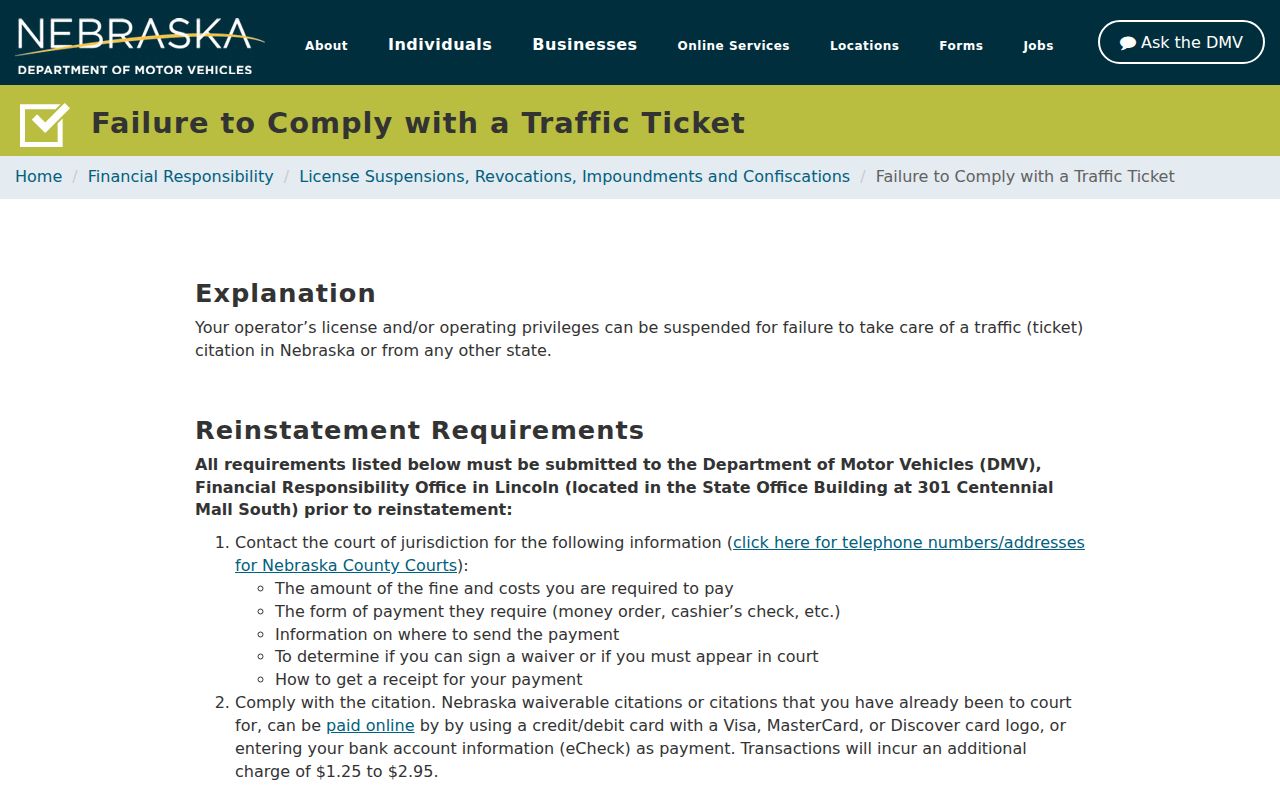
Once a citation is resolved, check both sides separately. Ask the DMV about your license status and the Nebraska court about any warrant status, since each office keeps its own record. Note: A DMV posting estimate does not set the timing of a judge's recall order.
How Nebraska Flags a License Hold
Nebraska runs several related systems that are easy to confuse. JUSTICE is the statewide trial-court case-information service. The DMV administers a traffic-citation compliance suspension based on court paperwork. County Courts issue traffic-case process. County sheriffs or named police officers serve the warrants. The state publishes no public statewide active-warrant or failure-to-appear hold search, and the DMV page is not a name-search portal.
| System or record | What it holds | Run by |
|---|---|---|
| JUSTICE public case search | Public trial-court case information and docket entries; not live warrant confirmation. | Nebraska Judicial Branch |
| Traffic compliance suspension | License consequence and proof-of-compliance process for a qualifying citation. | Nebraska DMV, using court compliance information |
| Traffic case and warrant | Citation, court orders, and any bench or FTA warrant in the specific case. | Issuing County Court; sheriff or other named officer serves process |
| NCJIS and NCIC | Restricted criminal-justice information for authorized agencies; not a public lookup. | Criminal-justice agencies and their system authorities |
Never treat an administrative license suspension as proof of a court warrant. The reverse holds too. A license can look clear while an unresolved court order still waits. Nebraska offers no public statewide FTA or license-hold search that answers both questions at once. You need the court's current record for process, plus the DMV's instructions for reinstatement.
Nebraska Has No Public Traffic Hold Search
Nebraska sets no statewide warrant-only portal for traffic cases. So a Nebraska warrant check runs through local channels, each with its own limits. The public JUSTICE search can locate a case across Nebraska's 93 counties. It issues no official "no warrant" certificate. Nor does it guarantee that an entry reflects live service status. County sheriff lists, where they exist, stay local. Fields and update practices vary by Nebraska county. The DMV compliance page explains what to submit for a qualifying suspension. It offers no public name search for FTA warrants. Failure to appear (FTA) means a missed court date. A license hold is a DMV restriction tied to citation compliance. Neither term alone proves a judge issued a warrant. Ask the County Court about process and the DMV about the separate license record. The Nebraska State Patrol publishes no statewide public-warrant roster either. Its Criminal Identification Division handles criminal-history record checks, which answer a different question from whether a judge's current order remains active. NCJIS and NCIC are restricted channels for criminal-justice users. They are not lawful public lookup options. A result from one channel never completes a search of the others. Start with the county printed on the citation. The Judicial Branch trial-court contacts list court contacts, and the Browse Counties directory routes to county court and sheriff information. If the ticket's county is uncertain, use the citation or the mailed court notice to identify it before asking about a specific case. Note: A local sheriff list cannot establish that no warrant exists elsewhere in Nebraska.
Nebraska Traffic Warrant Checks
Locate the case first, then confirm the warrant with the offices that control it. Nebraska search screens answer only part of the question. The Citation Information interface handles eligible citation lookups and payments, while JUSTICE serves as the trial-court case search. Neither one certifies warrant status. Ask the court and the serving agency for the final word, keeping the citation, warrant, and license suspension distinct.
- Read the citation for the county and court, and note the citation number, date, and any court notice. A city-origin ticket may name a prosecutor or police contact, but the court docket determines what is due.
- Search JUSTICE for the public case if it is available. The case search can show parties, offenses, financial entries, and register-of-actions details, but does not certify that a warrant is active, recalled, or absent.
- Call the County Court clerk. Ask whether the judge issued a warrant, whether an appearance is required, the balance and payment method, whether the court filed a Notice of Compliance, and what motion or hearing is needed if process remains active.
- Contact the sheriff or other named serving agency to ask whether it holds or served the warrant and whether it received a recall order. Sheriff contact methods and local lists are county-specific.
- If a DMV suspension applies, follow the DMV compliance instructions, provide court proof as required, pay the reinstatement fee if applicable, and confirm the license record with DMV. Then separately confirm the warrant's status with the court and serving agency.
Keep the citation or case number handy. If a Nebraska office cannot locate the case, ask which court now holds it rather than sending payment based on a third-party result.
Nebraska Traffic, Warrant, and DMV Records
One missed Nebraska ticket can touch several records. The citation and case belong to the court. A bench or FTA warrant is a judicial order in that same case. A DMV compliance suspension affects driving privileges instead, and it depends on court documentation under DMV rules. One update never changes the others automatically.
| Question | Court citation or case | Bench warrant | DMV suspension |
|---|---|---|---|
| Who controls it? | The County Court handling the citation. | The issuing court controls the order; sheriff or named police serves it. | Nebraska DMV applies its compliance process using court proof. |
| What can a public page show? | Eligible citation, payment, or JUSTICE case information. | No complete public statewide warrant-only lookup was found. | Instructions for clearing a qualifying failure-to-comply suspension. |
| What resolves it? | Payment, appearance, or other case action as the court directs. | A court order or action specified by the issuing judge. | Required court compliance proof and reinstatement steps, where applicable. |
| What does it not prove? | Payment does not alone prove a warrant was recalled. | A docket or local list may not show the full current picture. | Suspension status does not prove whether a warrant exists. |
The Nebraska DMV lists a $50 reinstatement fee. It applies to qualifying failure-to-comply suspensions and sits apart from the court fine, court costs, and any court-set bond. DMV instructions also describe an online transaction charge of $1.25 to $2.95 for court payment, so check the current payment screen. No statewide warrant-recall fee exists in Nebraska.
Clearing a Nebraska Traffic Warrant
Ask the court first. Before sending money on a Nebraska traffic warrant, ask whether payment resolves only the citation balance or whether a separate appearance, motion, or judicial recall is required. The court that issued the warrant controls its recall. Nebraska ePayments accepts eligible case payments by card or eCheck. The Judicial Branch notes one exclusion: bond cannot go through that service. Payment may also hinge on whether the citation is waiverable or whether the person has already appeared. Follow the case-specific instructions the court provides. The official Nebraska Judicial Branch ePayments page sets out the online court-payment channel and lists what it excludes.
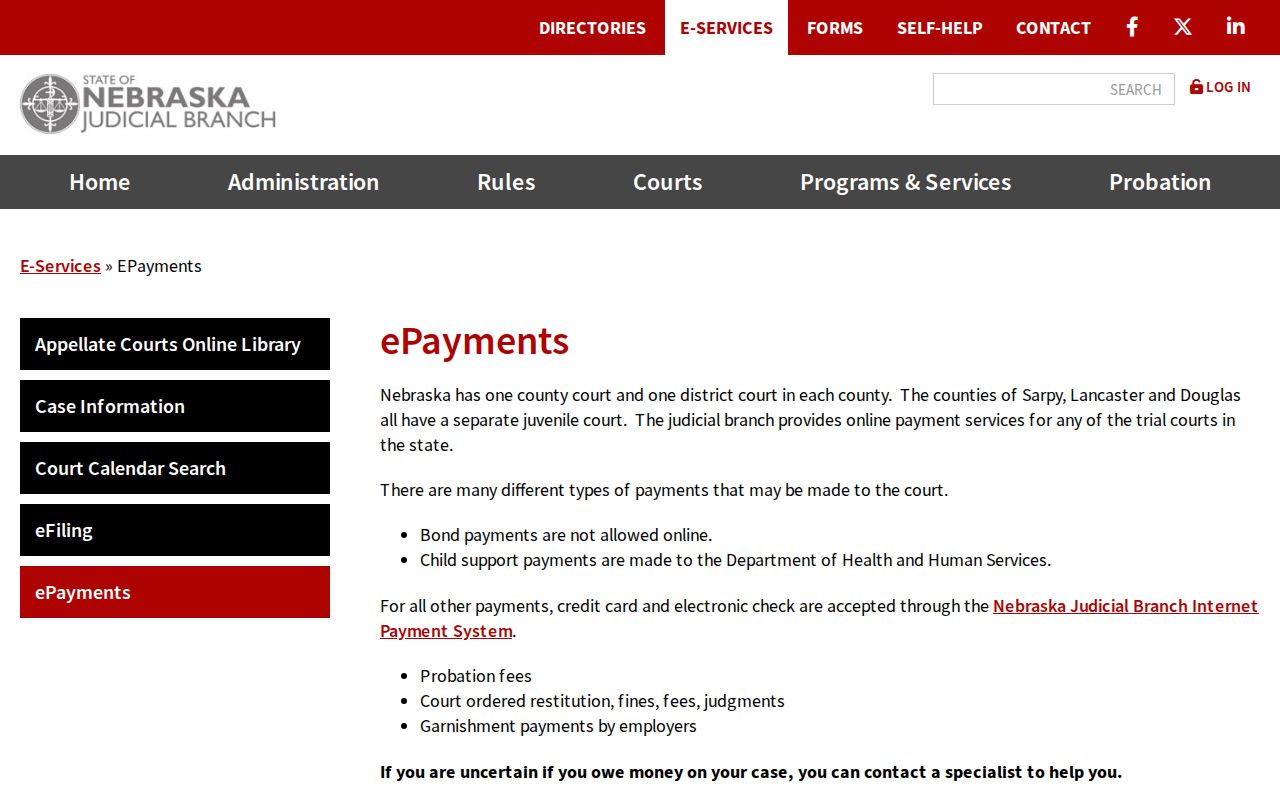
The ePayments page confirms that bond cannot be paid online. Ask the Nebraska court or county bond contact about the authorized method instead.
Important: Paying a traffic balance or DMV reinstatement fee does not by itself prove the judge recalled a warrant; confirm the written court order and sheriff notice.
If the warrant follows a missed court date, ask the clerk how to request a new appearance or file a motion to recall or quash. Recall means the judge withdraws the warrant. The citation may still need a hearing. Nebraska has no general statewide recall form. No uniform filing fee or automatic "pay to lift" system exists either. A lawyer can help arrange an informed appearance. Once the court resolves the citation, get a Notice of Compliance or receipt for DMV purposes if a suspension applies. Nebraska County Courts may file compliance electronically. Otherwise send DMV the required proof. Keep the receipt and any written recall order. Then ask the Nebraska clerk whether the order is entered, and the sheriff whether it received notice. Do not treat the court-payment posting delay or the DMV's next-day transmission note as the clock for a warrant update. Note: Court compliance, warrant recall, bond, and DMV reinstatement are separate steps in Nebraska, each with its own record.
When a Nebraska Traffic Date Is Missed
Missed a Nebraska traffic court date? Start with the citation itself. Find the County Court named on it and pull up the public case record. Then call the clerk. Ask what happened at the hearing, whether the judge ordered a warrant, and what the current balance runs. Ask whether an appearance or a motion is required, and get the case number plus the method for written proof of payment or compliance. If a Nebraska warrant is confirmed, ask which bond or recall options the judge has authorized.
Nebraska Traffic Warrant or Driver Record
A Nebraska traffic warrant search is about court process in one case. A driver record is something else entirely. That inquiry covers DMV records and driving privileges. The DMV's traffic-ticket compliance page explains how a qualifying suspension gets handled, but it cannot tell you whether a judge issued or recalled a warrant. Keep the two questions apart. That way an administrative status never gets mistaken for a court order.
| Feature | Traffic warrant information | Driver or license record |
|---|---|---|
| Record holder | The County Court and sheriff or named serving agency. | Nebraska DMV. |
| Core question | Did the court issue process, and is it still active or recalled? | Is a citation-compliance suspension or license restriction recorded? |
| Public route | JUSTICE may locate a case; call the clerk and sheriff for current confirmation. | Follow the DMV's own procedures for compliance and license status. |
| What clears it | The issuing court's order and any required case action. | Required compliance proof and DMV reinstatement steps, if applicable. |
The DMV is not a warrant search product, and a Nebraska traffic-warrant check is not a driving-history report. When a court or DMV result seems inconsistent, contact the record holder directly. Ask what date was updated and which document controls. A license reinstatement fee is not a warrant fee. A court bond is not a fine payment either. Use the issuing court for court records and the DMV for its own. When you need copies rather than a fast status answer, send a focused request to the office holding the specific record under the Nebraska Public Records Act. Its response framework governs access requests, not real-time warrant confirmation. For Nebraska county court and sheriff details, use the county directory.
Nebraska City Traffic Routes to County Court
Older Nebraska records and city websites can carry labels like "municipal court" or "police magistrate." Nebraska reorganized its courts in 1972. That reform consolidated limited-jurisdiction courts into a uniform County Court system. Municipal-court employees transferred into County Court effective July 1, 1985. Today, city-ordinance and traffic matters generally belong in County Court, even when a city prosecutor or police officer handled the citation. This history matters when a Nebraska city ticket fails to surface in a supposed city-court warrant search. Use the county named on the citation. Then confirm the case with the Nebraska County Court or its clerk. City police may serve process named in an order. County Court itself controls the case and any warrant it issues. No separate statewide city-court warrant portal exists in Nebraska. Note: A legacy court label on a Nebraska ticket does not mean a separate city court still controls the file today.